About the author : bbmemesalon@gmail.com

Fine hair styling is less about forcing volume into every strand and more about creating the right conditions for movement, shape, and hold. When hair is fine, a product that feels luxurious in the hand can quickly turn into flat roots by lunchtime. The most polished result comes from thoughtful preparation: a cut that supports lift, a styling routine that respects the hair’s texture, and a finish that still feels like you.
Start With a Cut That Creates Shape
The foundation of fuller-looking hair is the haircut, not the hairspray. Fine hair often benefits from a clean perimeter because blunt or softly structured ends make the overall shape appear denser. A carefully considered bob, a collarbone-length cut, or longer hair with restrained, invisible layers can all create a more substantial visual line.
Layers are not automatically the answer. Too many short layers can remove the very density fine hair needs, leaving the ends wispy and making daily styling more difficult. The better approach depends on your natural density, growth patterns, face shape, and how much time you want to spend styling each morning. A few internal layers may create movement without sacrificing fullness, while a more one-length silhouette can give delicate strands a strong, refined presence.
Bangs can also transform fine hair when they are designed with intention. A soft curtain fringe can frame the face and add dimension around the crown, while a fuller fringe creates an immediate sense of density at the front. The key is avoiding a fringe that is too sparse or too heavily thinned out. Fine hair needs its weight protected.
Fine Hair Styling Begins Before the Blow-Dry
A beautiful blowout cannot compensate for a routine that weighs the hair down from the start. Fine hair generally needs cleansing that removes buildup without leaving the scalp feeling stripped, followed by conditioner placed primarily through the mid-lengths and ends. Applying rich conditioner too close to the roots can soften the hair so much that lift disappears before styling begins.
After washing, resist the urge to vigorously rub hair dry with a towel. Fine strands are especially prone to breakage when wet. Instead, gently press away excess water, then apply a lightweight heat protectant and a volumizing product at the roots. Use only enough to support the style. With fine hair, more product rarely means more performance.
A mousse, root-lifting spray, or airy styling foam can give the hair memory without the stiffness associated with older-school volume products. If your hair is color-treated, dry, or prone to tangling, a small amount of lightweight leave-in conditioner through the ends can provide needed slip. Keep richer creams and oils away from the scalp unless your stylist specifically recommends them for your hair.
Build Lift With Direction, Not Excess Heat
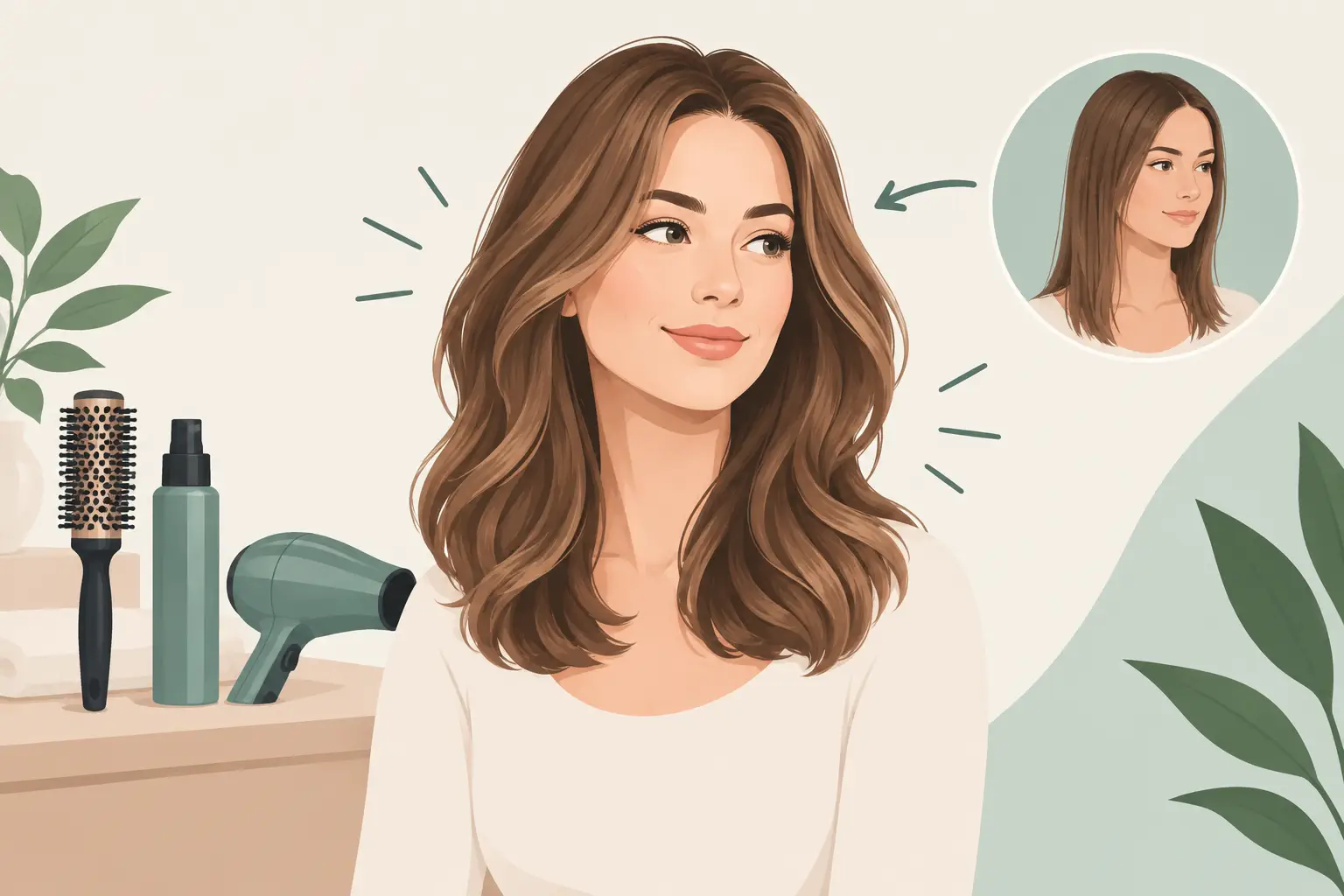
The most effective volume technique is simple: dry the roots in the opposite direction from where the hair will ultimately fall. If you normally part your hair on the left, begin by drying it to the right. This encourages the roots to stand away from the scalp, creating natural lift once you return the hair to its preferred part.
For a smooth finish, use a medium round brush that matches your desired shape. A smaller brush creates more bend and lift, while a larger brush gives a softer, editorial finish. Focus first on getting the roots dry. Fine hair collapses when moisture remains at the scalp, even if the lengths look polished.
There is a trade-off here. High heat can create a quick, dramatic blowout, but repeated overheating can make fine hair more fragile and difficult to style over time. Choose medium heat whenever possible, keep the nozzle directed down the hair shaft to encourage shine, and finish each section with a cool shot. The cool air helps set the shape while keeping the result touchable.
If you prefer to air-dry, create your part while the hair is still damp and clip the roots upward for a few minutes. This will not produce the same fullness as a brush blowout, but it can make an everyday style look more intentional. A partial blow-dry at the crown is often the best compromise for clients who want polish without a longer routine.
Choose Texture That Still Looks Soft
Fine hair often looks its most expensive when it has a little texture. The goal is not stiff, overworked volume. It is the kind of movement that catches the light in photographs, holds its shape through dinner, and still looks natural when tucked behind the ear.
For waves, avoid curling every section in the same direction. Alternate the direction of the curl, leave the ends slightly straighter, and let the hair cool before brushing it through. This prevents the style from becoming too formal or overly separated. A light texturizing spray can add grip, but apply it in short bursts and work it in with your fingertips rather than layering it on heavily.
When creating a sleek style, fine hair needs a different kind of discipline. A flat iron can make strands look glossy, but pressing too often can flatten the root area and reduce dimension. Keep the crown lifted with a gentle brush blowout first, then use the iron only through the mid-lengths and ends. A tiny amount of finishing cream on the ends can refine the silhouette without making it look oily.
Make Your Part Work Harder
A part is a small detail with an outsized effect on fine hair. A deep side part can create instant asymmetrical volume and add a more glamorous feeling for an event or portrait session. A centered part feels modern and clean, particularly with a blunt cut, but may show more scalp if the hair is very fine at the crown.
Changing your part occasionally can also help prevent hair from settling flat in the same direction every day. This is especially useful for clients who wear a smooth blowout or a simple down style throughout the workweek. Even shifting the part a fraction of an inch can refresh the root area without restyling the entire head.
For special occasions, volume does not need to mean a large, heavily teased hairstyle. A softly elevated crown, a half-up style with concealed support, or a low chignon with gentle fullness at the sides can feel elegant and camera-ready. The best event styling considers the neckline, outfit, makeup, and lighting so every element works together.
Refresh Without Starting Over
Second-day hair can be excellent for fine hair because it often has more grip than freshly washed strands. The challenge is refreshing the roots without coating them in product. Apply dry shampoo sparingly at the scalp, allow it to sit briefly, then massage or brush it through until there is no visible residue.
If the ends have lost their shape, revive only the pieces around the face and the top layer with a round brush or curling iron. Re-styling every section adds unnecessary heat and can make the hair look overprocessed. A small adjustment at the crown, a new part, and a few polished face-framing pieces are often enough to restore the entire look.
For humidity, use a lightweight anti-frizz spray rather than a dense serum. San Diego’s coastal air can bring softness and texture to fine hair, which can be beautiful, but it may also relax a carefully styled blowout. A flexible finishing spray gives shape support while allowing the hair to move naturally.
Let the Style Serve Your Whole Image
Fine hair should never be treated as a limitation. Its softness, shine, and natural movement can be remarkably elegant when the cut and styling choices are made with care. At BB Meme Salon, the conversation can extend beyond a single hairstyle to the complete impression you want to create, whether that means an effortless weekday blowout, wedding-ready texture, or a polished look designed for photography.
Bring reference images, but also share how you wear your hair in real life. The style that looks best is the one that respects your texture, suits your routine, and makes you feel composed from every angle. A few well-chosen techniques, repeated consistently, can turn fine hair into one of your most expressive features.