About the author : bbmemesalon@gmail.com

A fresh cut, dimensional color, or camera-ready blowout begins before the styling brush touches your hair. Your scalp is the foundation for every polished finish, and a thoughtful scalp care routine can make the difference between hair that feels merely clean and hair that looks luminous, comfortable, and full of movement.
For San Diego clients, the balance can be especially personal. Beach days, dry air, workout schedules, styling products, color appointments, and frequent heat styling all affect the scalp differently. The goal is not to pursue a perfectly stripped, squeaky-clean feeling. It is to create a consistent rhythm that keeps the scalp comfortable and supports hair that photographs beautifully from every angle.
Why the Scalp Deserves Beauty-Level Attention
The scalp is skin, but it lives under a very specific set of conditions: hair density, natural oil production, perspiration, product buildup, friction from hats or ponytails, and exposure to sun. When it is uncomfortable or congested, the effects can show up in your finished style. Roots may fall flat sooner, hair can look dull at the crown, flakes may catch the light, and styling can feel less cooperative.
A well-considered routine is not about using the most products. It is about noticing what your scalp is asking for. Some people need more cleansing after regular workouts. Others need gentler washing because their scalp feels tight after shampooing. Clients with color-treated or textured hair may need extra attention to moisture without overloading the roots.
This is where professional perspective matters. A stylist sees the full picture: your scalp condition, your density, your color history, how your hair responds to heat, and the finish you want to create. Healthy-looking hair is not one-size-fits-all. It is crafted through choices that suit your texture and lifestyle.
Build a Scalp Care Routine Around Your Real Life
The most effective routine is one you can maintain between appointments. Start with your wash frequency, then refine the way you cleanse, condition, and style.
Cleanse for your scalp, not just your ends
Shampoo belongs primarily on the scalp. Apply it in sections if your hair is thick or dense, then use the pads of your fingertips to massage gently. Nails can create irritation and tiny abrasions, especially if you are already experiencing sensitivity.
Focus on lifting oil, perspiration, and styling residue at the roots. Let the rinse carry the cleanser through the lengths rather than piling shampoo onto the ends, which can leave color-treated or dry hair feeling rough. If you use dry shampoo, texturizing spray, root powder, or heavier styling creams often, a second gentle cleanse may be worthwhile.
How often you wash depends on your scalp rather than a beauty rule. Fine hair and active routines may call for more frequent cleansing. Coily, curly, or highly processed hair may thrive with more space between washes and a moisture-forward approach. If your roots feel oily by the end of the day, that does not mean you have failed at hair care. It simply means your routine may need a better cleansing match.
Make scalp massage part of the process
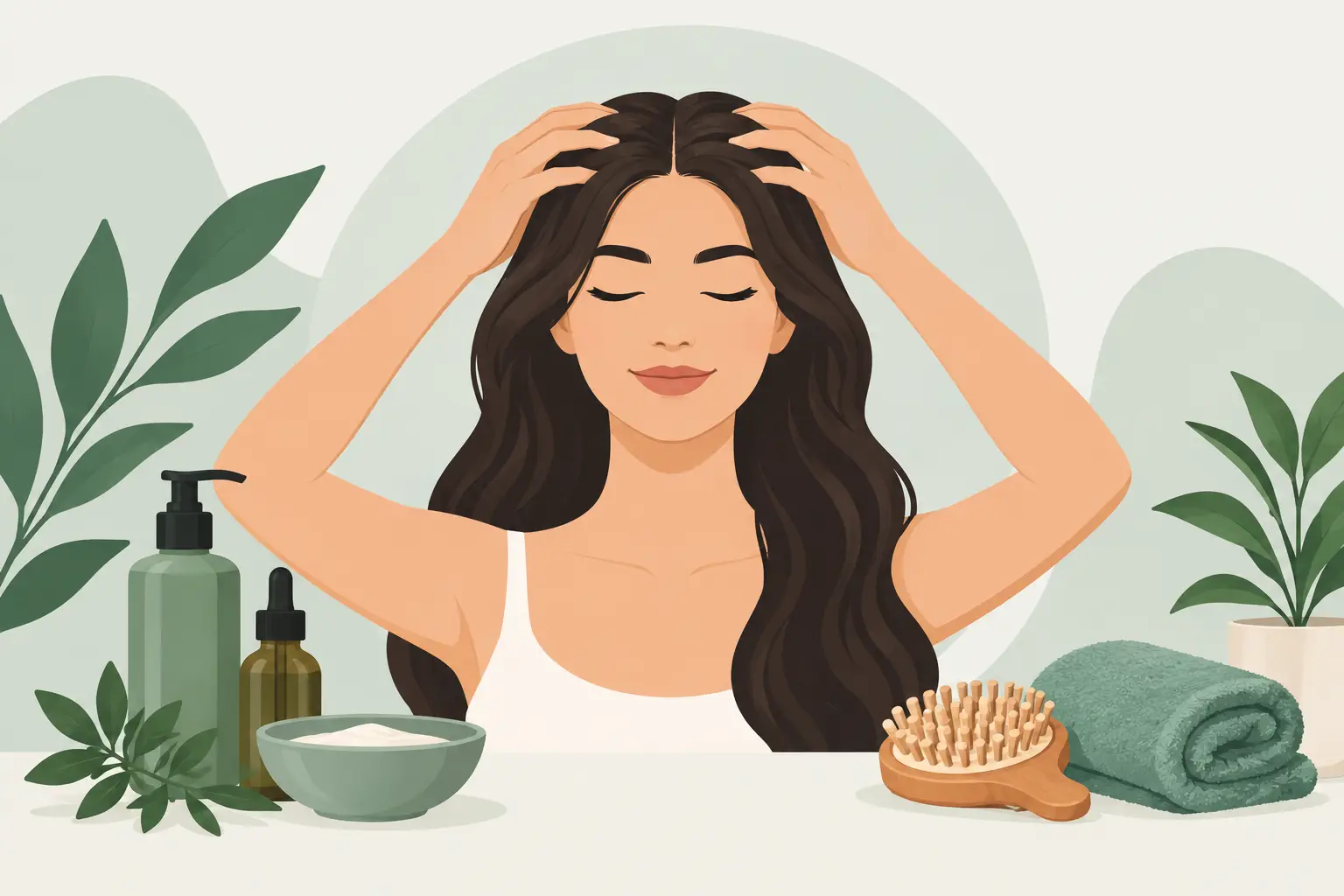
A slow, brief massage during shampooing can feel restorative while helping distribute cleanser across the scalp. Work in small circles with light pressure, moving from the hairline to the crown and then toward the nape. Two or three intentional minutes are enough.
This small ritual also gives you a chance to notice changes. Tenderness, persistent itching, unusual flakes, or new areas of irritation are worth paying attention to. Beauty care should feel good. If a concern continues or becomes painful, a dermatologist is the right next step rather than adding more products at random.
Condition with placement in mind
Conditioner is designed for the hair shaft, where softness, shine, and manageability are needed most. Apply it from the mid-lengths through the ends, then comb through gently with fingers or a wide-tooth comb if your texture benefits from it.
Bringing rich conditioner too close to the roots can weigh down finer hair or contribute to a coated feeling at the scalp. There are exceptions, especially for very dry curls and coils, but placement is still intentional. The goal is hydrated lengths and a scalp that feels clean, light, and balanced.
Know When to Exfoliate and When to Pull Back
Scalp exfoliation can be useful for people dealing with visible buildup, frequent dry shampoo use, or a scalp that feels congested even after washing. But more exfoliation is not better. Overdoing it can create irritation, disrupt the skin barrier, and make a sensitive scalp feel worse.
For many people, an occasional scalp-focused clarifying or exfoliating treatment is enough. Think in terms of every few weeks rather than every wash, then adjust based on your hair type, product use, and how your scalp feels. If you have a fresh color service, sensitivity, psoriasis, eczema, broken skin, or an active flare-up, ask a professional before introducing exfoliating acids or scrubs.
Physical scrubs deserve extra care. Large, rough particles can be difficult to rinse and may be too abrasive for delicate skin. A gentle formula and a light hand are always more elegant than an aggressive reset.
Protect the Scalp From Styling Stress
The polished looks you love should not come at the expense of scalp comfort. Tight ponytails, buns, extensions, and frequent high-tension styling can leave the hairline and crown sore over time. Rotate your part, vary the placement of updos, and give your roots a break when you can.
Heat matters, too. While hot tools are used on the hair rather than directly on the scalp, high heat near the root area can contribute to dryness and discomfort. Use a heat protectant through the lengths, avoid pressing tools against the scalp, and choose the lowest effective temperature for your texture.
San Diego sunshine brings another consideration. A hat is often the simplest form of scalp protection when you will be outdoors for extended periods, particularly if you have a visible part, thinning areas, or a sensitive scalp. A beautiful color service deserves thoughtful protection from both heat and UV exposure.
Common Scalp Care Mistakes That Disrupt the Finish
One of the most common mistakes is treating every flake as dryness. Flaking can have several causes, including product buildup, oil imbalance, irritation, or a skin condition that needs medical guidance. Adding more oil without understanding the cause can make some situations worse.
Another is overcorrecting after one bad hair day. A single oily day does not always require a harsh clarifying wash, and a little tightness after a new product is a reason to pause and observe, not necessarily to build a ten-step regimen. Introduce one new scalp product at a time so you can tell what is actually helping.
Finally, do not confuse fragrance or intense tingling with effectiveness. A product can feel dramatic without being the right choice for your skin. Comfortable, balanced, touchable hair is usually the better sign that your routine is working.
Bring Your Routine Into the Salon Conversation
Your appointment is an ideal moment to discuss what happens between appointments. Mention whether you wash daily, use dry shampoo, swim, work out frequently, wear extensions, experience flakes, or feel sensitivity after color. These details help shape recommendations that are specific to your hair and your desired finish.
At BB Meme Salon, hair is approached as part of total image creation. That means considering not only the cut or color itself, but also how it will wear in your daily life, under event lighting, and in photographs. A scalp that feels balanced helps create the clean root lift, healthy movement, and refined texture that make styling look effortless.
A routine may also change with the season, a new color direction, or an upcoming wedding or portrait session. If you are preparing for a milestone, avoid experimenting with unfamiliar scalp treatments immediately beforehand. Consistency is more valuable than a last-minute reset when you want your hair to feel dependable.
Your scalp does not need perfection. It needs attention, gentle technique, and products chosen with purpose. Give it that care, and every future style has a more beautiful place to begin.