About the author : bbmemesalon@gmail.com

A pixie haircut makes every styling choice visible – the direction of the fringe, the lift at the crown, the softness around the ears. The best pixie haircut styling tips are not about forcing short hair into one look. They are about learning which details bring out the shape your stylist created and make your features feel beautifully framed.
A well-cut pixie can look effortless, but the polished result comes from a thoughtful routine. A few minutes, the right product texture, and a little attention to proportion can take your hair from slept-in to intentionally styled without making it stiff or overworked.
Start With the Shape, Not the Product
Short hair has less length to disguise an uneven cut or a shape that no longer suits your routine. Before trying a new styling cream or heat tool, look at the architecture of your pixie: Is it cropped close through the sides? Is the top longer and piecey? Does the fringe sweep forward, to the side, or up and away from the face?
Your styling should support those decisions. A soft, rounded pixie often looks best with a lightweight cream and gentle blow-drying. A more editorial, undercut-inspired shape can handle a firmer paste and deliberate separation. If your hair is growing out, you may need a different part or a touch more volume at the crown to keep the silhouette balanced.
This is why regular maintenance matters. Pixie cuts tend to shift quickly, especially around the neckline, ears, and fringe. For many clients, a refinement appointment every four to six weeks keeps the design looking intentional rather than simply shorter-than-short hair that has grown out.
Pixie Haircut Styling Tips for Your Everyday Routine
The most flattering pixie styles usually begin on damp hair, not soaking-wet hair. Blot gently with a towel, then use your fingers to place the natural direction of the hair before it dries. This is the moment to decide whether you want softness, lift, a side sweep, or a textured finish.
Use less product than you think. Start with an amount no larger than a pea, warm it thoroughly between your hands, and apply it first through the mid-lengths and ends. Adding product directly at the roots can make fine hair look flat or leave a close crop looking heavier than intended.
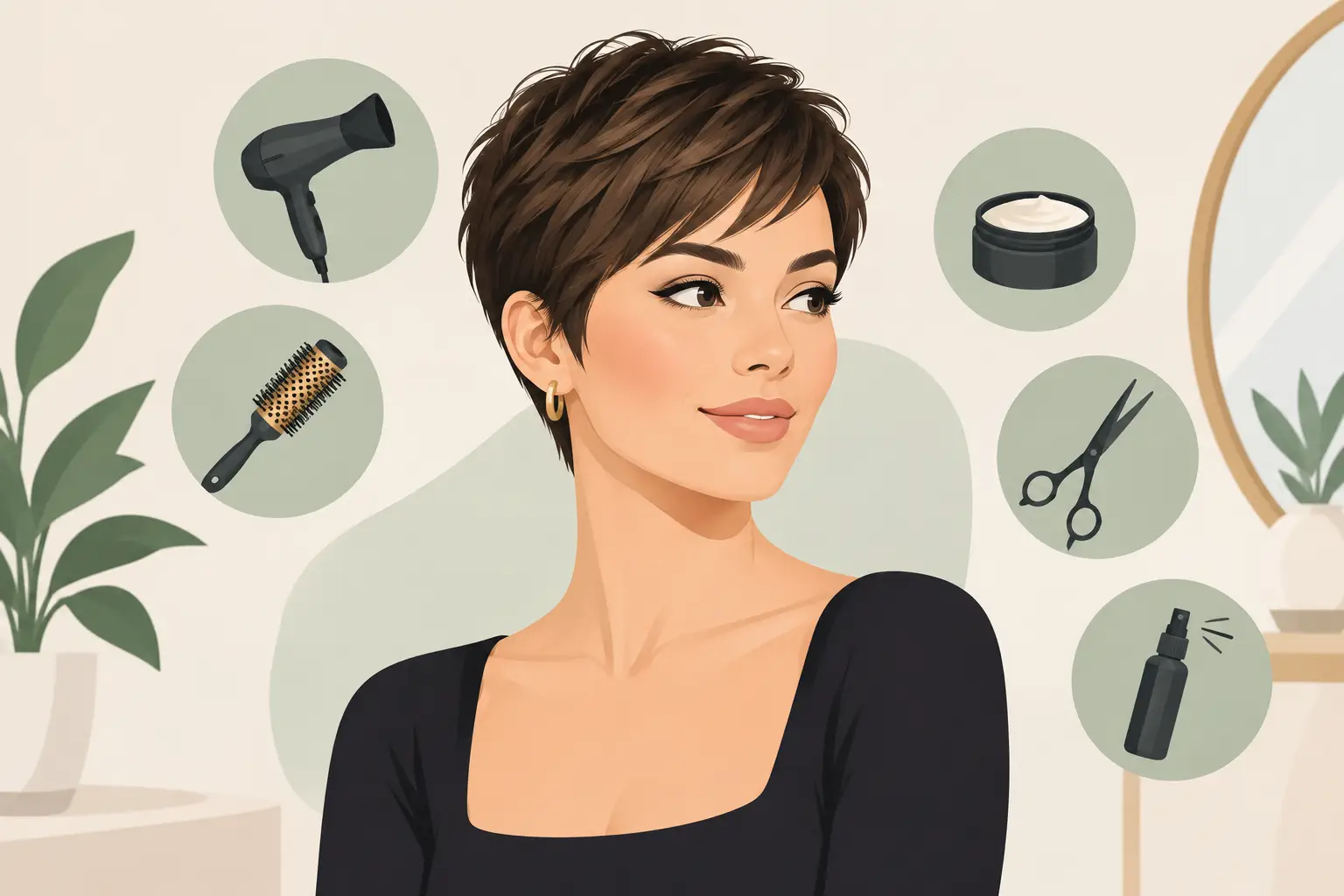
For a clean, natural finish, a lightweight styling cream offers movement with control. For more definition, choose a pliable paste or soft wax and pinch small sections rather than raking product through everything at once. A texture spray can add airy separation, particularly when your pixie has longer layers on top. The goal is to see the haircut, not a visible coating of product.
Blow-dry with purpose
A small blow-dryer is often the most useful tool in a pixie routine. Direct airflow at the roots while lifting the hair in the opposite direction from where it naturally falls. Once the roots have dried with a little lift, guide the hair back into its finished placement.
For a sleek side-swept pixie, use a small round brush or a flat brush to smooth the fringe toward the temple. For a fuller, modern silhouette, dry the crown upward and slightly forward before loosening it with your fingers. If your hair tends to flatten overnight, focusing heat on the roots for even one or two minutes can make a remarkable difference.
Finish with a cool shot if your dryer has one. It helps settle the cuticle and preserves the direction you created, especially in San Diego’s coastal humidity.
Choose texture that matches your hair type
Fine hair usually benefits from a mousse or root-lifting spray applied sparingly before blow-drying, followed by a dry texture spray only where you want separation. Heavy waxes can collapse delicate strands, so build volume with technique before adding hold.
Thicker hair may need a cream or balm to soften bulk and give longer top layers a more refined direction. If your pixie feels too round, use your hands to pull selected pieces away from the head as you dry. A small amount of paste at the ends can create definition without turning the style rigid.
Wavy or curly pixies deserve a routine that respects their natural pattern. Apply a curl cream or light gel to damp hair, then diffuse lightly or let it air-dry without repeatedly touching it. Once dry, gently separate a few curls near the fringe and crown. Trying to smooth every bend can remove the dimension that makes this version of a pixie so striking.
Create Three Looks From One Cut
A pixie does not need to look identical every day. The same haircut can feel tailored for work, softly romantic for dinner, or expressive enough for a photo session depending on how you direct the front and crown.
For a polished daytime look, keep the sides smooth and allow the top to move with a subtle side part. A light cream and a quick blow-dry create a finish that feels composed without looking overly styled.
For a more textured look, dry the hair with your fingers, then use a paste to twist a few pieces at the crown and fringe. Keep the texture concentrated. When every section is spiked or separated, the style can lose its elegance. Leaving some areas smooth gives the texture a purposeful contrast.
For an evening or special-occasion finish, try a deeper side part and tuck one side behind the ear. Add controlled volume at the crown and a touch of shine through the front. This changes the visual line of the face and photographs beautifully, particularly when paired with intentional makeup, earrings, or a neckline that lets the haircut take center stage.
Solve the Most Common Pixie Challenges
Bedhead is normal with a pixie, particularly when the crown is longer. Rather than adding more dry product to yesterday’s style, mist the hair lightly with water and reset the roots with a blow-dryer. A small amount of product afterward will go much further and look fresher.
Cowlicks require cooperation, not a battle. While hair is damp, dry the cowlick in the opposite direction first, then direct it where you want it to sit. If it still resists, ask your stylist to assess it at your next appointment. A thoughtful adjustment to the length or weight in that area often works better than stronger product.
If the sides stick out, the hair may be too dry, too short in one area, or simply in need of a tiny amount of smoothing cream. Press the product between your palms and glide it over the surface rather than combing it through. If the issue repeats daily, it may be time for a shape-up.
Let Your Pixie Support Your Total Image
A pixie is a statement cut because it puts the face, posture, and personal style in clear view. That can feel liberating, but it also means the best result is rarely just about hair. Your color dimension, brow shape, skin finish, accessories, and wardrobe all influence how the silhouette reads.
For camera-ready moments, avoid making major styling changes minutes before photographs. Choose a version of your pixie that already feels like you, then refine the details: a little lift at the crown, a clean fringe, soft texture where the light can catch it. At BB Meme Salon, this kind of considered styling is part of a larger image-creation approach, where a haircut can complement the occasion and the person wearing it.
Your pixie should feel like a design you get to reinterpret, not a rule you have to follow. Keep a few products you genuinely enjoy, learn the direction that flatters your features, and give yourself permission to wear the same cut softly one day and boldly the next.