About the author : bbmemesalon@gmail.com

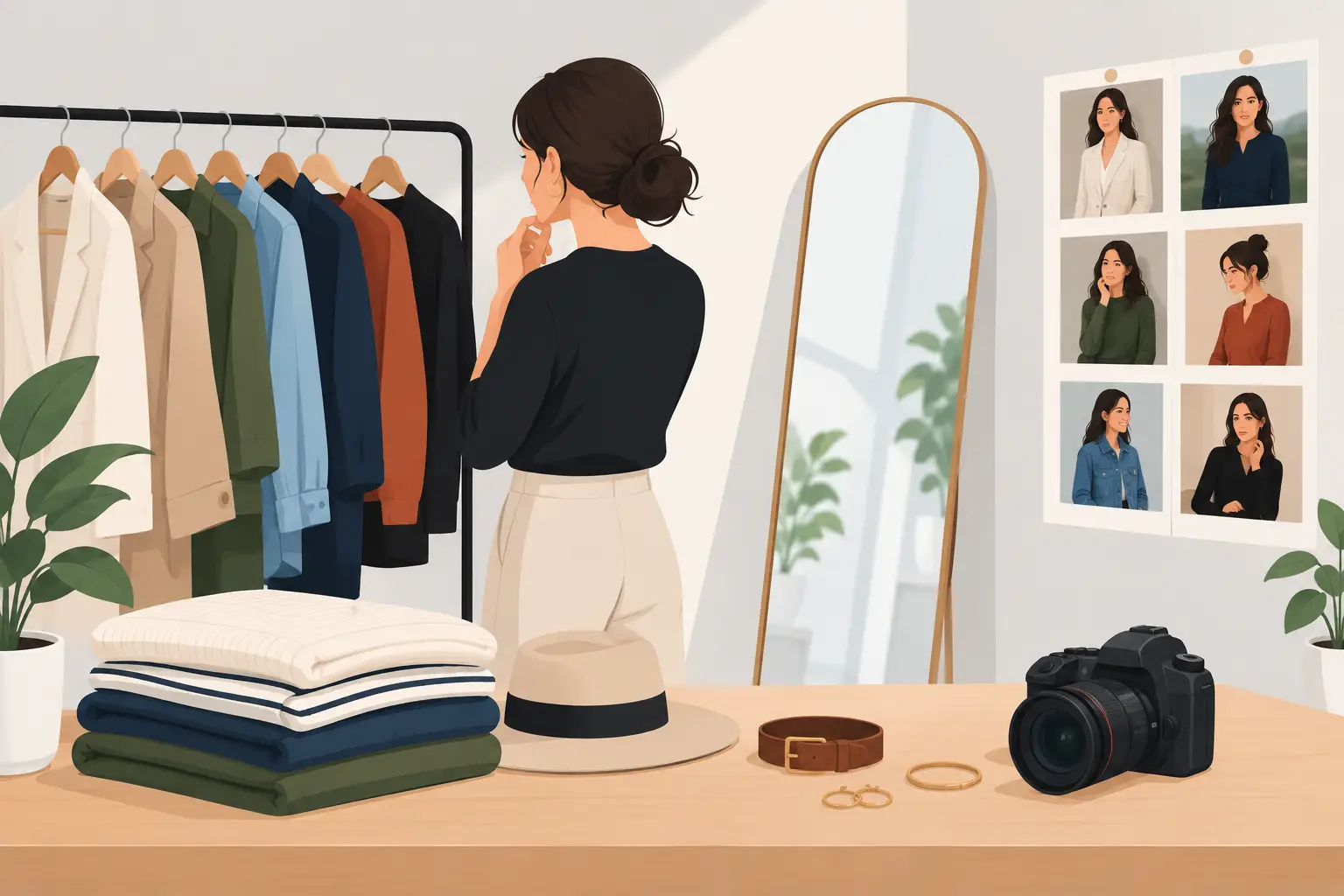
The outfit that feels almost right in the mirror can become the only thing you notice in a portrait. A thoughtful portrait wardrobe planning guide helps prevent that moment. Rather than buying an entirely new look or following a rigid formula, choose clothing that supports your features, your setting, and the feeling you want the final images to hold.
A beautiful portrait is never only about the clothes. Hair, skin, posture, light, and expression all work together. Still, wardrobe is where many people either create calm visual harmony or introduce distractions that compete with their face. The goal is not to look overly styled. It is to look like yourself, with a little more intention.
Begin With the Story of Your Portrait
Before choosing a color or opening your closet, consider what the portrait is for. A personal branding session calls for a different level of polish than an anniversary portrait, a creative editorial shoot, or a family milestone. The best outfit is not universally flattering in theory. It is appropriate for the story you want the photograph to tell.
For a professional portrait, polished structure often reads well: a tailored jacket, refined knit, crisp blouse, or dress with a defined shape. If the images are for a creative portfolio, you may have more freedom to use an unexpected silhouette, a memorable accessory, or a stronger color. For a romantic or celebratory session, movement and texture can bring softness to the frame.
Think about where your images will live, too. A portrait used on a website, business profile, or printed invitation needs to feel clear at a small size. A large framed image can carry more texture and visual detail. There is room for personality in both, but the scale changes what will be noticed first.
Choose Colors That Keep the Focus on You
Color is one of the most powerful decisions in portrait wardrobe planning. A garment can be beautiful on a rack and still overpower the person wearing it when photographed. Generally, mid-tone and rich colors create more depth than stark white, neon shades, or very pale beige that closely matches skin tone.
Look for colors that make your complexion appear rested and alive. Deep blue, forest green, soft rose, burgundy, warm terracotta, charcoal, cream, and muted jewel tones often photograph with elegance. The right choice depends on your undertone, hair color, and the mood of the session. A vivid red dress may be perfect for a bold downtown setting, while a quiet blue-gray may feel more natural for a coastal portrait.
Black can be sophisticated, but it is not automatic. In low light, an all-black outfit may lose detail and feel visually heavy. If black is a signature part of your style, introduce dimension through a textured fabric, a softer neckline, subtle jewelry, or a layer in a complementary tone. White can be fresh and luminous, yet a bright optic white shirt may reflect light onto the face or appear too stark against a pale backdrop. Ivory, soft cream, or a warmer neutral is often more forgiving.
When planning outfits for more than one person, avoid matching exactly. Coordinating is more refined. Start with two or three colors that work together, then vary the tones and textures. A soft sage dress, navy shirt, and cream knit have more life than everyone in identical denim and white tops.
Let Fit and Fabric Do the Quiet Work
A camera notices what the eye may overlook. Clothing that pulls at buttons, gaps at the neckline, wrinkles easily, or bunches at the waist can interrupt an otherwise beautiful image. Choose pieces that fit your body comfortably when you sit, stand, turn, and lift your arms. If you are adjusting an outfit every few minutes, it will affect how relaxed you feel.
Fabric matters just as much as fit. Matte materials such as cotton poplin, crepe, linen blends, silk with a soft finish, fine knits, and structured suiting tend to photograph beautifully. They hold shape without calling attention to themselves. Very shiny satin, thin clingy jersey, and reflective synthetic fabrics can create bright highlights that change as you move.
Texture is welcome when it adds dimension. A ribbed knit, linen jacket, woven dress, or brushed wool layer can make a simple palette feel considered. The trade-off is scale: delicate texture usually reads as richness, while a very busy print can read as visual noise. If you love pattern, choose one clear pattern and keep the rest of the look quiet.
Consider the Neckline From the Camera’s View
Necklines frame the face. A V-neck can create length and openness, a scoop neck feels soft, and a collared shirt brings structure. High necklines can look elegant, especially with hair pulled back, but they may feel restrictive if they are not part of your normal style.
Try on the outfit and take a few phone photos from chest height, not just mirror selfies. Notice where the eye goes. The strongest option will usually lead attention upward toward your expression, not toward a complicated neckline, logo, or oversized detail.
Build an Outfit With Depth, Not Clutter
Layers are useful in portraits because they offer shape and flexibility. A blazer over a simple top, an open button-down over a fitted tank, a long coat, or a light wrap can create several distinct looks without requiring a complete costume change. They also give your hands something natural to do and add movement when photographed outdoors.
Choose layers that make sense for San Diego’s light and climate. A heavy winter coat can look out of place on a bright Coronado afternoon, while a breezy overshirt or tailored jacket offers polish without feeling forced. For an indoor studio-style portrait, a more sculptural layer may be exactly what gives the image its editorial presence.
Accessories should be edited, not eliminated. Small earrings, a favorite watch, a delicate chain, or a meaningful ring can add a personal note. Large statement pieces can be beautiful when they are intentional, but they should support the portrait’s style rather than take over the frame. Remove anything that makes noise, tangles easily in hair, or must be constantly repositioned.
Plan Around Hair, Makeup, and Grooming
Wardrobe does not exist separately from the rest of your preparation. The collar of a shirt changes how an updo feels. A dramatic earring may disappear under loose waves. A bold lip can balance a simple black dress, while a colorful blouse may call for softer makeup. Total image creation is about seeing these elements as one composition.
Plan your hair before settling on a neckline. If you expect to wear your hair down, avoid collars or scarves that will crowd the area around your face. If you are considering an upstyle, an open shoulder, boat neck, or clean collarbone line can feel particularly graceful. Fresh color, a precise cut, conditioned skin, and groomed nails all contribute to the quiet confidence that translates on camera.
At BB Meme Salon, portrait preparation can be approached as a coordinated creative experience, with hair, beauty care, and photography considered together rather than as separate appointments. That approach is especially helpful when the images mark a wedding, career shift, celebration, or personal reinvention.
What to Bring to Your Session
Arrive in your first outfit, if possible, with undergarments that work beneath it. Bring alternate shoes, a lint roller, and a garment bag for pieces that wrinkle. If you have two looks, choose options that create a clear change in mood or shape. For example, pair a tailored neutral outfit with a softer, more expressive color rather than bringing two nearly identical black tops.
Avoid making your first decision under pressure. Try everything on a few days before the session, including shoes and accessories. Sit down, walk around, and look at the outfit in daylight. Take photos from several angles. This simple rehearsal helps you notice a slipping strap, a visible bra line, or a hem that needs attention while there is still time to make a graceful adjustment.
A Portrait Wardrobe Planning Guide for Feeling Like Yourself
The most successful portrait wardrobe does not disguise you. It gives your natural presence a clearer frame. You do not need to wear a trend that feels unfamiliar, squeeze into a size that changes how you move, or choose a color because someone once said it was universally flattering.
Select the version of your style that makes you stand taller: the jacket that fits beautifully, the dress that moves when you walk, the color that makes your eyes look awake. When your clothing feels considered and comfortable, you have more room to be present. That ease is often the detail people remember long after the portrait is taken.