About the author : bbmemesalon@gmail.com

A color aisle can make a new look feel as simple as choosing a photo on a box. But salon color versus box dye is not really a question of convenience versus luxury. It is a question of how much control you want over your final image, your hair’s condition, and what happens after the first wash. For a fresh shade before a celebration, a career moment, or simply a season when you want to feel more like yourself, those details matter.
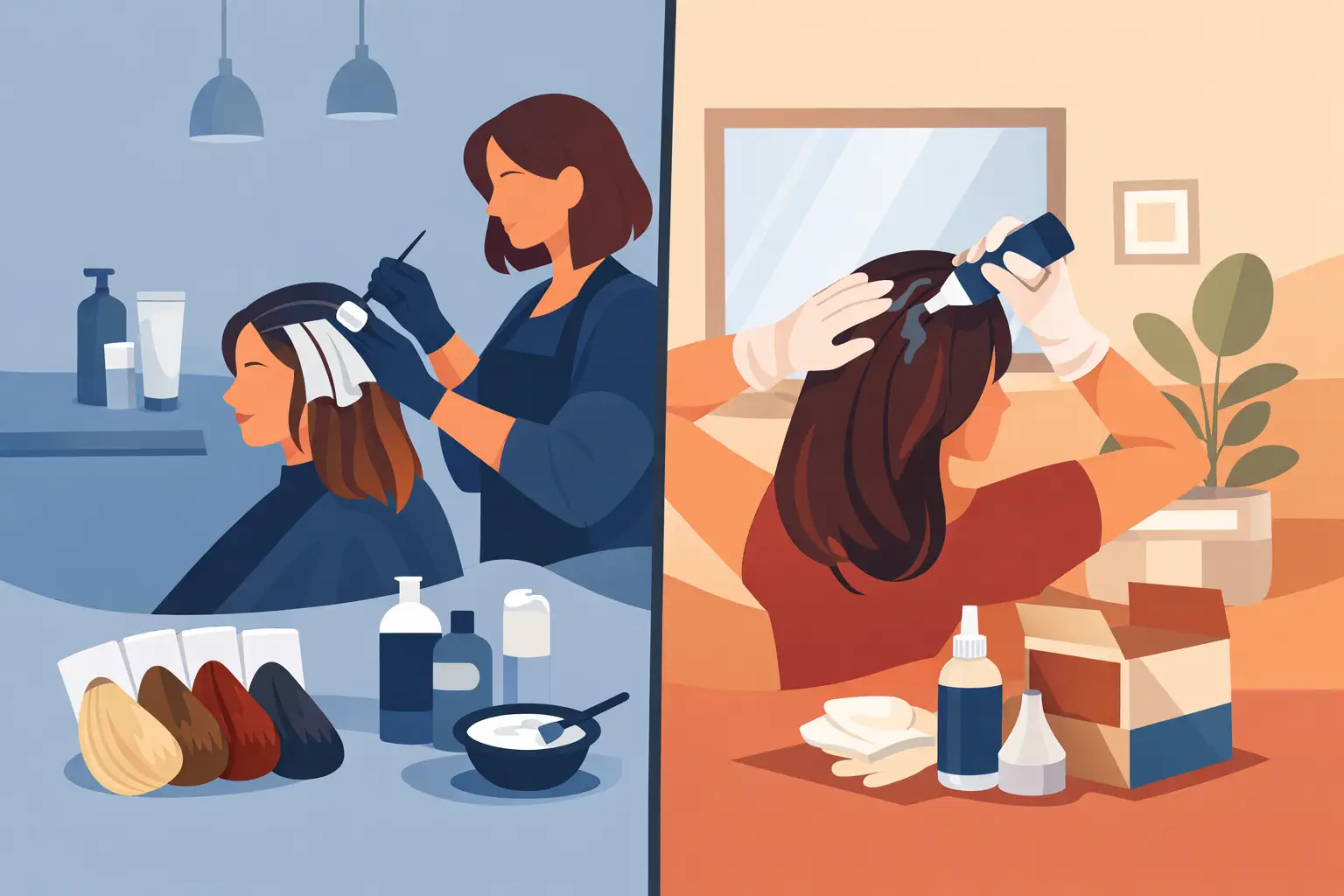
Salon Color Versus Box Dye Starts With Customization
Box dye is designed to work for a wide range of people, hair textures, and starting shades. That broad approach is exactly why it can be unpredictable. One pre-mixed formula must account for hair that is virgin, previously colored, porous from heat styling, or resistant to color. The result may be darker, warmer, flatter, or more uneven than the swatch suggests.
Salon color begins with what is actually in front of the stylist: your natural level, existing color history, gray pattern, hair density, texture, and the condition of your ends. A professional can adjust the formula, developer strength, timing, and placement to create a result that belongs to you rather than a one-size-fits-most outcome.
That difference is especially visible with dimensional color. Soft brunettes, lived-in blondes, rich reds, and refined gray blending often rely on more than one tone. They may need brightness around the face, depth at the root, and carefully placed contrast through the lengths. A boxed application typically saturates every strand in the same way, while a salon service can create movement that looks polished in daylight, at dinner, and in photographs.
The Formula Is Only Part of the Service
Professional coloring is often described as better color, but the service is also about better observation. A stylist watches how your hair processes, checks the tone as it develops, and can make adjustments before the appointment is over. That responsive attention is difficult to recreate at home, particularly when working with lightener or correcting a prior color.
The application itself changes the outcome. Roots frequently process differently than porous ends. Gray hair can require a distinct approach from the rest of the head. If the goal is to go lighter, previously colored hair may lift unevenly, and the underlying warmth must be considered before a toner is chosen. These are not small technicalities. They are the reason a blonde can look creamy instead of yellow, or a brunette can look luminous instead of overly dark.
At a salon, color is also paired with a professional finish. The blowout, haircut, and styling reveal how the tone moves with your shape and texture. For clients preparing for a wedding, a portrait session, or an event, that complete view is part of crafting an image that feels intentional.
Why Box Dye Can Look Different Than Expected
Box dye has a place. It can be an accessible option for someone covering a few gray roots in a familiar shade, with healthy hair and realistic expectations. The issue is not that every at-home color experience ends badly. The issue is that the margin for error becomes smaller when the desired change is significant.
Permanent box color often uses a developer level intended to provide reliable coverage across many hair types. On some hair, that can leave the cuticle feeling dry or create a band of darker color through the mids and ends, especially if the formula is pulled through at every touch-up. Repeated applications can make later lightening more complicated because artificial pigment builds up in layers.
The color pictured on packaging is also based on a particular starting level. A medium brown box will not create the same brown on natural dark hair, highlighted hair, and hair that has been colored several times. It may add warmth without lifting enough, or deposit pigment so deeply that returning to a lighter shade requires patience and multiple appointments.
Red and black shades deserve extra caution. They can be beautiful and dramatic, but their pigments are famously persistent. A decision that feels temporary on a Saturday afternoon may become a longer color-correction conversation when you are ready for a softer copper, dimensional brunette, or blonde.
The Real Cost Includes Maintenance and Correction
The price difference between salon color and a box is immediate. The longer-term cost is less obvious. When an at-home color works beautifully, it may feel like an easy win. When it turns too dark, too warm, uneven, or dry, correcting it can require more time, more processing, and a more gradual plan than an initial custom service would have needed.
Color correction is not a quick eraser. A stylist may need to remove artificial pigment slowly, balance uneven bands, protect compromised areas, and rebuild a wearable tone over several sessions. The healthiest path is sometimes not the fastest path. That can be frustrating when you want a dramatic change before an important date, which is why planning color ahead is an act of care for both your hair and your schedule.
Maintenance also looks different depending on the result you want. A single-process brunette may need root coverage on a regular rhythm, while highlights or balayage can grow out with more softness. Glosses can refresh shine and tone between larger appointments. A stylist can help choose a color design that fits how often you truly want to visit and how you prefer to maintain your hair at home.
When a Salon Appointment Is Worth It
A professional appointment is particularly valuable if you want to go lighter, correct uneven color, blend gray in a natural-looking way, add highlights, change your overall tone, or color your hair for a wedding or high-visibility event. It is also the wiser choice when you do not know what has been used on your hair before. Old color, mineral buildup, and previous lightening can all influence the process.
It is worth considering the salon route even for a subtle refresh when presentation matters. The difference between a flat solid shade and a softly layered, light-responsive color may be quiet, but it changes how the hair frames your face. For image-conscious professionals and creative clients, that refined effect can carry from a video meeting to a photo-ready evening without feeling overdone.
At BB Meme Salon, the color conversation can be part of a broader total image creation experience. Hair, finishing details, skin and nail services, special-occasion styling, and photography can be considered together when you are preparing for a personal milestone or a visual branding moment. The goal is not to make everyone look the same. It is to create a look that feels composed, expressive, and unmistakably yours.
How to Make a Better Color Decision
Start by being honest about your goal. Are you trying to cover roots for a few weeks, or are you hoping for a meaningful transformation? Do you want a low-maintenance dimension, or do you enjoy a more precise, regularly refreshed finish? Bringing recent photos of your hair in natural light, along with inspiration images, gives a stylist useful context. Photos help communicate mood, but your current hair determines what is possible in one visit.
Also share your complete color history, including at-home dye, henna, temporary sprays, glosses, and treatments. There is no judgment in that conversation. Accurate information allows the stylist to protect your hair and map a realistic route to your preferred shade.
The most beautiful color is rarely the most dramatic choice on a box. It is the color that respects your hair’s history, complements your skin tone and style, and still feels elegant as it grows out. Give your next color decision the same care you give the moments you want to be remembered in.