About the author : bbmemesalon@gmail.com

A beautiful portrait rarely comes from holding perfectly still. It comes from subtle movement, thoughtful styling, and a point of view that feels like you. The most effective portrait posing techniques are not about forcing your body into unfamiliar shapes. They are about creating length, ease, and connection so your confidence has room to appear.
Whether you are preparing for a professional headshot, engagement session, milestone birthday, wedding portrait, or personal branding shoot, posing works best when it supports your total image. Hair, skin, clothing, posture, expression, and light all share the frame. When they are considered together, the result feels polished without looking overly posed.
Begin With Posture, Not a Pose
Before worrying about what to do with your hands or where to look, reset your posture. Let your shoulders drop away from your ears, lengthen through the crown of your head, and allow your chest to feel open without pushing it forward. This creates an elegant foundation that photographs well from nearly every angle.
A useful adjustment is to shift your weight into one leg rather than standing evenly on both feet. The body naturally becomes more relaxed, and the hip line gains a gentle shape. For a standing portrait, place the leg closest to the camera slightly forward with a soft bend in the knee. It gives the image movement and prevents the rigid, square feeling of an ID photo.
There is a difference between good posture and stiffness. If your back feels overly arched or your shoulders look pulled back, soften the position. Take a breath, exhale, and let the pose settle. A camera notices tension quickly, especially around the shoulders, jaw, and hands.
Portrait Posing Techniques That Create Shape
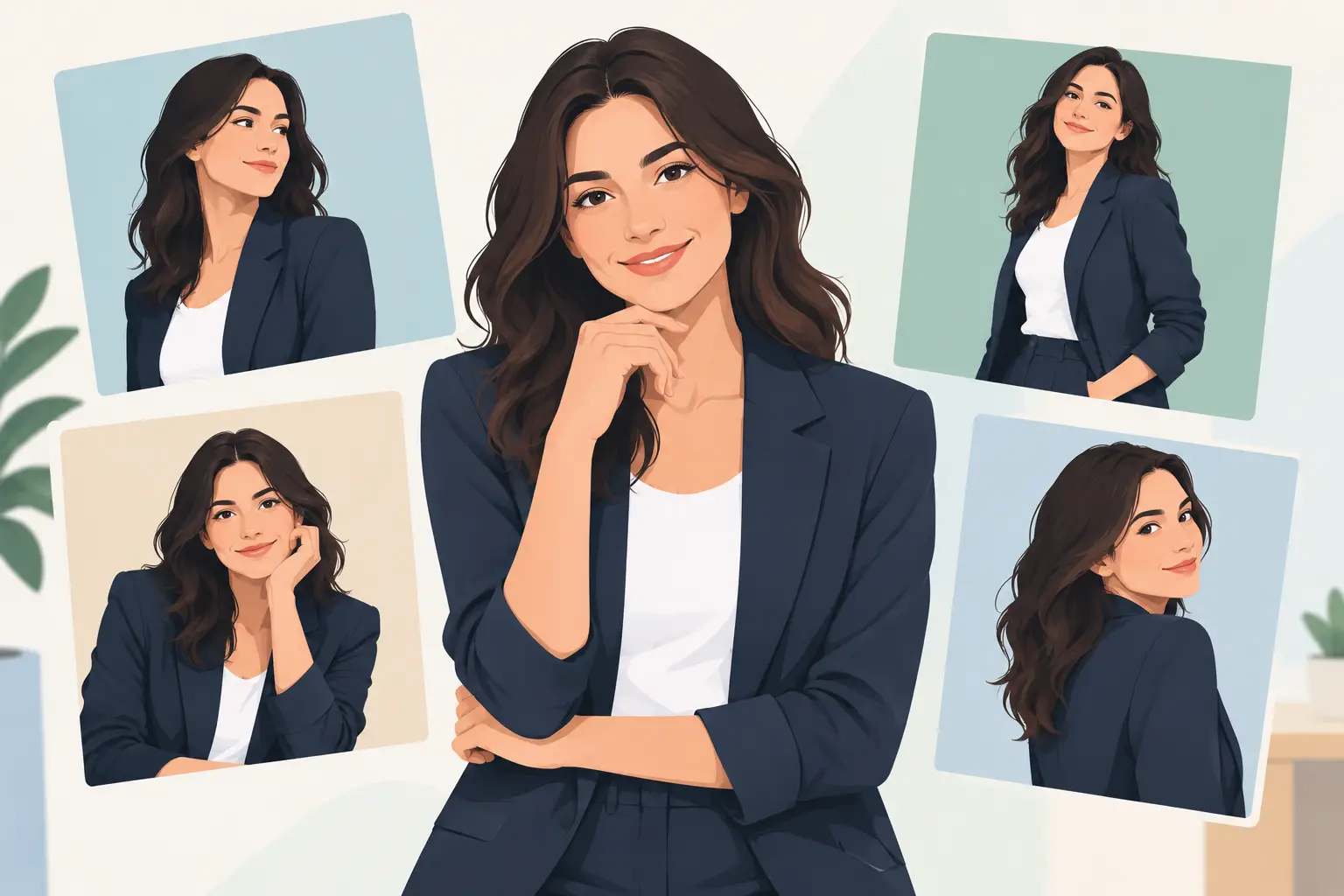
Photography translates a three-dimensional person into a flat frame. Small angles restore depth and help the eye move naturally through the image. Rather than facing the camera head-on, turn your body about 30 to 45 degrees and bring your face back toward the lens. This simple adjustment defines the shoulders, waist, and jawline while keeping the portrait open and approachable.
Creating a little space between your arms and torso is equally helpful. When arms are pressed tightly against the body, they can appear broader in a photograph, regardless of body type. A hand resting lightly at the waist, a relaxed bend in the elbow, or fingers touching a jacket lapel can create a graceful negative space.
Think in gentle diagonals. A tilted shoulder, a bent knee, or an angled chin can make a portrait feel more editorial and alive. The goal is never to manufacture dramatic lines that do not suit your personality. For some clients, a quieter pose with only a shifted shoulder is exactly right. For others, a stronger fashion-inspired stance brings out their presence. The best choice depends on the occasion, wardrobe, and the story the image should tell.
Let the Chin Lead, Then Soften
Many people instinctively pull their chin back when they feel nervous in front of a camera. This can shorten the neck and create tension beneath the jaw. Instead, imagine extending the chin slightly forward and then lowering it by the smallest amount. It feels unusual at first, but it creates a clean jawline and brings the eyes into focus.
Avoid dropping the chin too far. A low chin can make the gaze feel heavy or hide beautifully styled hair around the face. The right placement depends on camera height and lighting, so use the photographer’s direction while staying aware of your own comfort.
Give Your Hands a Purpose
Hands are expressive, but they can become awkward when they have no role in the image. Do not flatten them directly toward the camera or clench them into fists. Keep the fingers relaxed, with a little separation, as if you are holding a delicate piece of fabric.
A hand can lightly touch the hair near the ends, rest at the waist, adjust a cuff, hold a bouquet, or brush along the collarbone. These gestures work best when they are slow and intentional. In a close-up portrait, hands should support the face rather than compete with it. If a hand is placed near the cheek, keep the touch feather-light so the skin and expression remain relaxed.
Use Movement to Find the Natural Frame
The most flattering image may happen between poses. Instead of locking into one position, move through a small sequence: shift your weight, look away, bring your eyes back toward the camera, and let your expression change. This gives the photographer genuine transitions to capture.
For seated portraits, sit near the front third of the chair instead of settling deeply into the back. Place one foot slightly ahead of the other, angle the knees to one side, and lengthen through the torso. Leaning forward just a touch can create engagement and prevent the image from feeling distant. A slight turn through the shoulders keeps the composition refined.
Walking portraits also benefit from restraint. Take smaller, slower steps than you normally would, and keep the shoulders relaxed. Let the clothing move naturally. A long dress, tailored blazer, or softly styled hair can add beautiful motion, but rushing often creates a distracted expression or awkward foot placement.
Match the Pose to Your Hair, Makeup, and Wardrobe
Posing should never be considered separately from beauty preparation. A sleek bob, soft waves, an updo, bold lip color, or luminous skin each changes what the camera emphasizes. If your hairstyle has a defined part or a dramatic sweep, identify your preferred side before the session. Turning slightly toward the side that frames your face best can make the entire portrait feel more balanced.
Hair also needs room to be seen. If it has been styled with texture, volume, or movement, avoid covering it with both hands or turning so far that it disappears behind the shoulders. For an updo or statement earrings, a profile or three-quarter angle may showcase the details beautifully.
Your wardrobe affects posing as well. Structured tailoring often works well with a confident upright stance, while flowing fabrics benefit from movement and softer lines. A high neckline may call for a slightly longer neck and lifted posture. If you are wearing an outfit that feels restrictive, practice a few poses at home beforehand. Comfort is not a small detail. It shapes your expression in every frame.
Build an Expression Instead of Performing One
A convincing portrait is not always a smile. It may be warm, calm, playful, focused, romantic, or quietly powerful. Decide how you want the image to feel before the session, then give yourself permission to vary the expression.
A natural smile often arrives after a small exhale, a conversation with the photographer, or a moment of movement. Rather than holding a smile for too long, reset your face between frames. Look down, relax the jaw, and come back up. This prevents the strained expression that happens when someone tries to maintain the same smile for several minutes.
For a more serious portrait, keep the mouth relaxed rather than pressing the lips together. Think of a feeling instead of a facial instruction: confidence before a major presentation, contentment after a meaningful celebration, or curiosity about something just beyond the camera. Emotion gives the eyes a place to go.
Prepare for the Camera With Intention
Portrait confidence begins before the session. Choose clothing that allows you to sit, stand, and move with ease. Schedule beauty services early enough to feel settled, particularly when you are planning color, a haircut, facial treatment, nails, or special-event styling. Freshly cared-for details can make a meaningful difference because they let you focus on the experience rather than minor concerns.
Bring a small touch-up kit with lip color, blotting papers, and any accessories you may want to test. If the shoot includes multiple looks, consider how the hair and makeup will transition from one outfit to the next. A polished total image has continuity, even when the mood changes.
At BB Meme Salon, image creation is approached as a collaboration between personal style, expert beauty care, and the final photograph. The aim is not to make every client look the same. It is to create a look that feels elevated, camera-ready, and unmistakably personal.
Trust the Details You Cannot See
The camera may capture a lifted chin, a softened hand, or the moment your hair catches the light, but the most memorable quality in a portrait is often less visible. It is the ease that comes from feeling prepared and well cared for.
Practice a few positions, but do not rehearse yourself into stiffness. Arrive with an open posture, a clear sense of how you want to feel, and the willingness to move. The portrait will hold more than your appearance. It will hold the confidence you allowed yourself to bring into the frame.