About the author : bbmemesalon@gmail.com

A curl can look longer, shorter, fuller, or more sculpted from one wash day to the next. That is why knowing when to trim curly hair is less about following a rigid calendar and more about noticing how your individual texture is behaving. The right trim protects the shape you love, supports healthier-looking ends, and keeps your overall image feeling intentional – whether you wear your curls naturally, style them for work, or prepare for an occasion where every detail will be photographed.
When to Trim Curly Hair: Start With Shape, Not a Date
Most curly-haired guests benefit from a trim about every 8 to 12 weeks. That range is a useful starting point, but it is not a rule. Fine, color-treated, heat-styled, or highly porous curls may need attention closer to the eight-week mark. Dense, resilient curls with minimal damage may hold their shape beautifully for three or even four months.
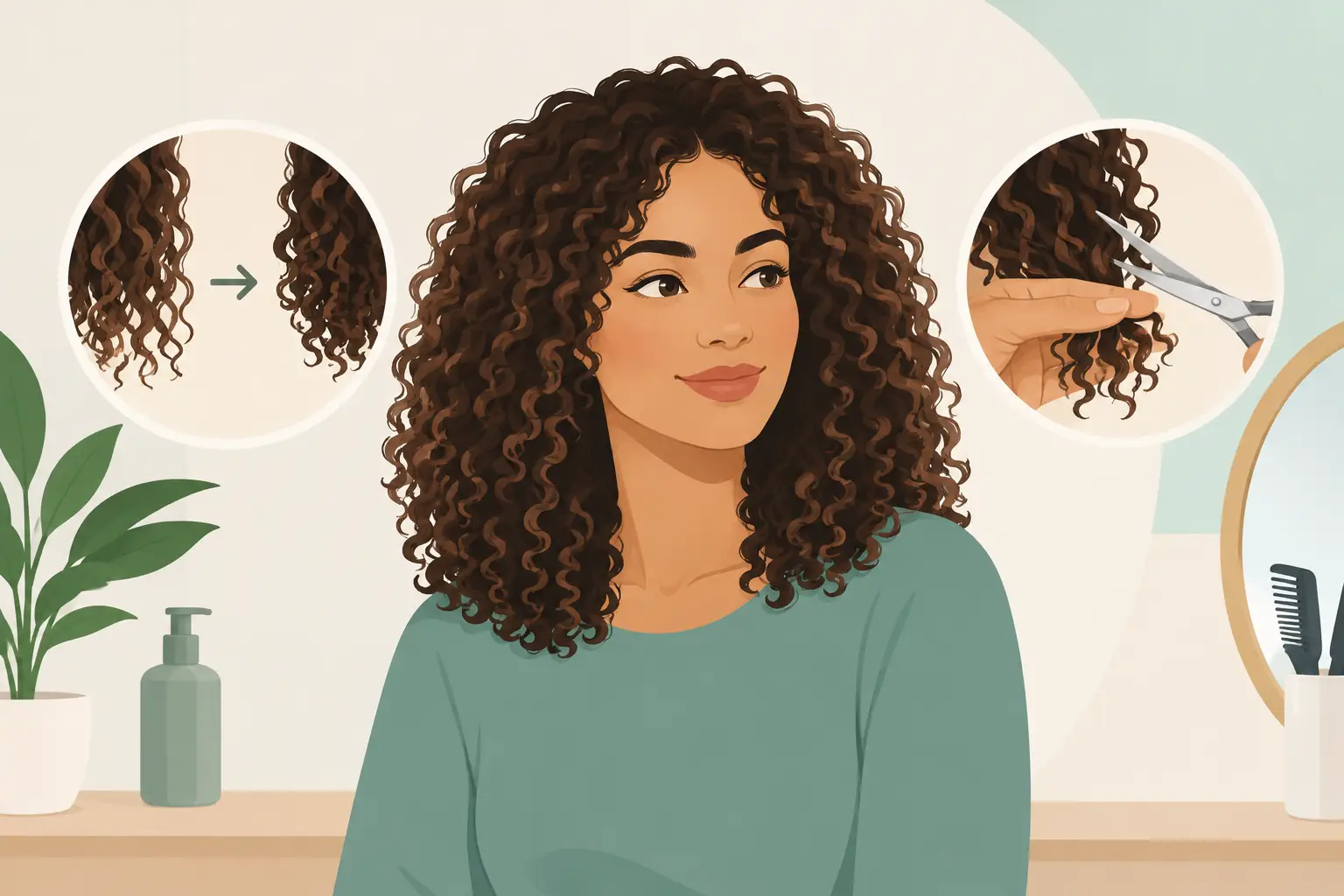
The more useful question is this: does your hair still fall the way you want it to? Curly hair is a living silhouette. As the ends wear down, layers can lose their definition, the perimeter can become uneven, and the crown may start to feel heavier than the rest of the style. A thoughtful trim restores proportion without asking you to sacrifice length unnecessarily.
For clients who prefer a refined, camera-ready finish, regular trims are part of maintaining the larger picture. Healthy, balanced curls frame the face differently. They make color appear more polished, styling more predictable, and your personal presentation more cohesive.
The Signs Your Curls Are Asking for a Trim
Split ends are the most familiar signal, but they are not the only one. Curly hair often gives quieter clues before visible breakage becomes obvious. Your usual routine may suddenly produce less definition. Ends may feel dry even after conditioning, or individual curl clumps may separate into a fuzzy, uneven veil.
Pay attention when your style begins to lose its architecture. Perhaps the bottom feels thin while the middle looks bulky. Maybe one side sits differently from the other, or your bangs no longer blend into the rest of the cut. These are not always product problems. They can be signs that the shape needs a skilled reset.
Tangles that collect repeatedly at the same points also deserve attention. A few knots are normal, especially with textured hair, ocean air, exercise, or a busy San Diego week. But persistent tangling at the ends can indicate fraying. Trimming worn ends helps prevent that fraying from traveling farther up the strand.
A trim may also be appropriate if your curls take much longer to style than they used to. When the cut has grown out of balance, you can spend extra time trying to coax volume into one area and calm another. A good shape should make your natural texture easier to work with, not turn every wash day into a negotiation.
Your Trim Schedule Depends on Your Hair History
The condition of your hair matters as much as its curl pattern. If you lighten, highlight, relax, or frequently heat-style your curls, regular trims can help preserve a cleaner, healthier-looking line. Chemical and thermal services do not automatically mean damage, especially when performed thoughtfully and supported with the right home care, but they do make consistency more valuable.
If you are growing out a short cut, it can feel counterintuitive to trim. In reality, small, strategic appointments often make the process look more elegant. Removing only what is worn or unbalanced keeps the growing shape deliberate. Skipping trims for too long can lead to wispy ends and uneven layers, which may eventually require more length to be removed.
For naturally low-maintenance curls that are rarely colored or heated, waiting longer can be appropriate. The trade-off is that the style may gradually become softer and less structured. That can be beautiful if you like an effortless, romantic shape. If you prefer a crisp outline, visible layers, or a more editorial finish, plan trims more regularly.
Seasonal Changes Can Shift the Timing
San Diego’s bright weather and coastal air are part of the appeal of living here, but sun, saltwater, and dry breezes can change how curls feel. After a summer of beach days, swimming, and outdoor events, ends may need more attention than usual. A post-summer trim can refresh the shape before fall gatherings, professional photos, or holiday celebrations.
Winter can be a useful time to refine curls, too. Indoor heat, travel, and richer styling routines may leave hair feeling less buoyant. Rather than waiting for obvious breakage, consider a seasonal check-in that focuses on movement, moisture, and shape.
Special events are another reason to plan ahead. If you are preparing for a wedding, portrait session, milestone birthday, or major career moment, schedule a trim several weeks before the event rather than the day before. This leaves time to live with the refreshed cut, adjust your styling routine, and allow your curls to settle into their natural rhythm.
Why Curly Hair Benefits From a Customized Cut
No two curl patterns behave exactly alike. Shrinkage, density, strand width, growth direction, and the way you style at home all influence where a trim should happen and how much should be removed. A one-length approach may create a beautiful, weighty result on one client and an unflattering triangle shape on another.
A curl-aware stylist looks at the whole composition: how your hair frames your face, where volume naturally lives, how the neckline sits, and what happens when the hair moves. The goal is not simply to remove damaged ends. It is to create a shape that feels like you.
This is especially meaningful when your hair is part of a larger beauty plan. The right cut can complement a fresh color service, balance makeup for a special event, and photograph with more dimension. At BB Meme Salon, the approach to hair is rooted in total image creation – treating the cut as a crafted element of your personal style, not a maintenance chore.
How to Prepare for a Curly Hair Trim
Arrive with your hair in a state that lets your stylist understand its real personality. For many curly clients, that means clean, dry hair worn naturally with minimal stretching or heavy product buildup. Your stylist may have a preferred preparation method, so ask when booking.
Bring clarity about what you love and what has stopped working. You do not need technical vocabulary. Saying, “My curls are flat at the crown,” “I keep losing definition at the ends,” or “I want to keep length but regain movement” gives your stylist valuable direction. Photos can help as well, particularly if you have a shape you loved in the past.
Be honest about your routine. If you diffuse every wash, air-dry most days, wear protective styles, or regularly use a curling iron, that information changes the recommendation. The best trim schedule is one that respects the hair you actually have and the life you actually live.
Between Trims, Protect the Shape You Paid For
A great cut lasts longer when daily care supports it. Detangle gently, beginning at the ends and working upward. Use heat thoughtfully, with protection when needed, and avoid pulling curls into tight styles day after day. Satin or silk at night can reduce friction, while a refreshed mist of water and curl-friendly styling product can revive the pattern without repeated washing.
Most of all, resist the temptation to snip uneven pieces at home after a rushed morning. One small curl can shrink dramatically once cut, and a few impulsive trims can interrupt the balance of carefully placed layers. If a section is bothering you, take a photo and bring it to your next appointment.
Your curls do not need to look identical every day to look beautiful. They simply need a shape that honors their movement, texture, and character. When that shape begins to disappear, a well-timed trim can bring the confidence back – softly, artfully, and with exactly the right amount of change.