About the author : bbmemesalon@gmail.com

Your wedding hairstyle should feel like the most polished version of you, not like a costume that appears only in photographs. A thoughtful bridal hairstyle trial review is where inspiration becomes a personal design process: a chance to see how a style moves, feels, photographs, and holds before the wedding day arrives.
For brides in San Diego, the trial is especially valuable. Coastal humidity, outdoor ceremonies, warm afternoons, veils, changing dresses, and long celebrations all affect the final result. The goal is not simply to recreate an image from a saved photo. It is to craft a look that belongs naturally to your features, hair texture, wedding setting, and personal style.
What a Bridal Hairstyle Trial Is Really For
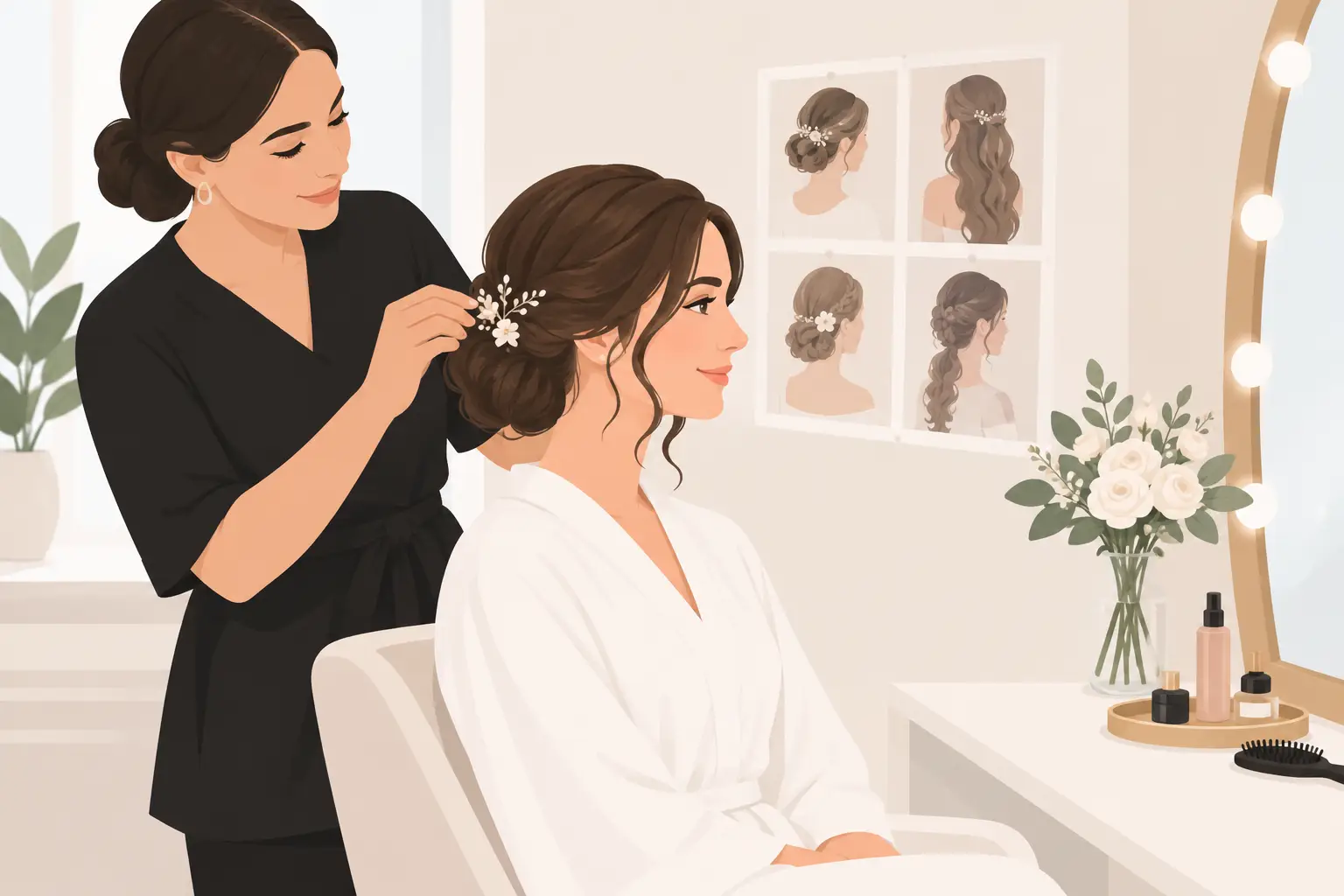
A bridal trial is a creative consultation with a visible result. It gives you and your stylist time to explore the difference between a style that looks beautiful in theory and one that feels beautiful on you.
Your stylist considers more than the requested updo, braid, ponytail, or wave pattern. Face shape, density, length, color dimension, extensions, neckline, accessories, and ceremony timing all influence the design. A softly textured low bun may feel romantic and effortless, for example, but it needs the right placement to complement a high-neck gown or an open back. Hollywood waves can look luminous in photographs, yet they may need a different preparation plan for a breezy waterfront ceremony than for an indoor evening reception.
The trial also lets you communicate preferences with clarity. Perhaps you love the front pieces in one version but prefer more structure at the crown. Maybe the first look feels too formal, too undone, too voluminous, or simply unlike yourself. These are useful discoveries, not disappointments. A successful trial creates room for refinement before there is a schedule, a photographer, and a room full of people waiting.
How to Prepare for Your Bridal Hairstyle Trial
Bring a small collection of inspiration images, but choose them with intention. Four to six images are generally more helpful than a gallery of fifty. Include looks you love, along with one or two styles you know are not right for you. This helps your stylist understand your visual language, whether it leans modern and clean, softly romantic, editorial, classic, or relaxed.
Your gown is one of the most important pieces of information. Bring a photo of the front, back, and neckline, plus images of your veil, hair accessories, and earrings if you have them. A hairstyle does not exist separately from the total image. The silhouette of your dress, the scale of your jewelry, and the mood of your venue should all feel connected.
Arrive with clean, completely dry hair unless your stylist has given you different instructions. Be honest about your usual hair behavior, including how quickly curls fall, whether your scalp gets oily, and how your hair reacts to humidity. If you plan to wear extensions, bring them to the appointment or discuss them beforehand. Extensions can transform volume and length, but they must be color-matched, placed comfortably, and integrated with the intended style.
It also helps to wear a top with a neckline similar to your wedding dress. This is a small detail that can make the finished style easier to judge.
A Bridal Hairstyle Trial Review: What to Look For
When you look in the mirror at the end of the appointment, do not ask only whether the hairstyle is pretty. Ask whether it is working for your wedding day.
First, notice the balance. Does the shape enhance your face from the front, profile, and back? Does it complement the neckline and make space for your accessories? A beautiful style should have intention from every angle, especially because guests, photographers, and your partner will see you from more than one viewpoint.
Next, assess comfort. Pins should feel secure without creating pressure or a headache. The hairstyle should allow you to smile, hug people, move through the day, and dance without becoming self-conscious. A highly sculpted updo may offer exceptional durability, while a softer style can feel more natural and touchable. Neither is automatically better. It depends on what matters most to you and how long you need the look to last.
Then, study the texture in photographs. Take pictures in natural light, indoor light, and from a slight distance. Hair that appears softly defined in person can sometimes read as flat on camera, while a style that feels more textured close up may photograph with beautiful dimension. If your wedding includes professional photography, this step is essential.
Finally, give the style time. Wear it for a few hours if your schedule allows. Notice whether the pieces around your face stay where you want them, whether the volume settles attractively, and whether you still feel like yourself after the excitement of the reveal has passed.
Questions Worth Asking Your Stylist
A polished trial should leave you feeling informed, not uncertain. Ask how long the finished style is expected to hold, what changes may occur in heat or humidity, and whether a touch-up kit would be helpful. If you are wearing a veil, ask how it will be secured and removed without disturbing the hairstyle.
You may also want to ask about a second-day plan if your celebration includes a rehearsal dinner, welcome party, or post-wedding brunch. Coordinating these looks does not mean repeating the same hairstyle. It means creating a cohesive beauty story that gives each occasion its own character.
If you are still deciding on hair color, schedule that conversation early. Fresh color, subtle dimension, or a gloss can make a significant difference in how braids, waves, and updos catch the light. Major color changes, however, are best planned well ahead of the wedding so there is time to adjust if needed.
When a Second Trial Makes Sense
One trial is enough for many brides, particularly when the vision is clear and the first design feels right. A second appointment can be worthwhile if you have changed your dress, added a veil, selected extensions, shifted from an indoor venue to an outdoor one, or remain torn between two distinct directions.
It can also be helpful when the wedding look is more intricate. A detailed braided style, a structured chignon, or vintage waves often benefits from additional time to perfect the details. The second trial is not about chasing perfection in every strand. It is about confirming the elements that will allow you to feel calm and confident when the wedding morning begins.
At BB Meme Salon, bridal styling is approached as total image creation. The hairstyle is considered alongside skin, nails, event mood, and the camera-ready details that make a personal milestone feel fully curated. That artistic perspective is especially valuable when you want the final look to feel elevated without losing your individuality.
The Details to Confirm Before You Leave
Before the trial ends, make sure you and your stylist agree on the final direction, including part placement, volume, texture, accessory placement, and veil plan. Take reference photos from the front, sides, and back. These photos are not meant to make the wedding day rigid. They give the styling team a clear visual record of what you loved.
Confirm your wedding-day timeline as well. Hair usually needs to be finished before makeup is complete, dressing begins, and photography starts. Your stylist can advise on the right order based on the complexity of the design, the number of people receiving services, and whether anyone needs styling before you.
A bridal trial is one of the few moments in wedding planning when you can pause, look in the mirror, and see a piece of the day becoming real. Let it be both practical and enjoyable. The right hairstyle will not ask you to become someone else for the photographs. It will help you recognize yourself, beautifully prepared for the moment ahead.