About the author : bbmemesalon@gmail.com

A fringe can look perfectly balanced in the mirror, then suddenly feel crooked the moment you step into daylight or see a photo. If you are searching for how to fix uneven bangs, the most valuable first step is not reaching for scissors. It is identifying whether your bangs are truly uneven, simply sitting differently because of your part or cowlick, or reacting to humidity, product, and growth.
Bangs are a small detail with an outsized effect on your overall image. They frame the eyes, influence the proportions of the face, and can make a haircut feel polished or unfinished. A careful adjustment can restore the shape. An anxious, repeated trim can turn a subtle imbalance into a much bigger correction appointment.
First, See Your Bangs as They Really Are
Before cutting anything, wash or thoroughly dampen your bangs and style them as you normally would. Hair that has been slept on, flat-ironed in one direction, or pushed aside by a clip will not reveal its true fall. Blow-dry the fringe downward using low to medium heat, with the nozzle pointed from roots to ends. Use a small round brush only if that is part of your usual styling routine.
Then let your hair cool for a few minutes. Warm hair can appear longer and straighter than it will once it settles. Stand in natural light if possible and look straight ahead with your chin level. Avoid tilting your head or lifting your brows to inspect the line. Those tiny movements can make an even fringe appear uneven.
A bang line also does not need to be ruler-straight to be intentional. Soft, textured bangs often have delicate variation at the ends. Side-swept bangs are designed to create a diagonal movement. Curtain bangs should open gently around the center, with longer pieces blending toward the cheekbones. The goal is not mathematical symmetry. It is a balanced shape that supports your face and the rest of your haircut.
Why Bangs Become Uneven
Unevenness often begins with the way hair grows rather than a bad haircut. A cowlick at the front hairline can lift one side, separate the center, or bend a section in an unexpected direction. Humidity may cause one area to expand more than another, especially if the hair has different levels of texture through the fringe.
Your part matters, too. If you wear your hair slightly off-center but style your bangs straight down, one side may borrow more hair from the fringe than the other. This can create an apparent short side even when both sides were cut to the same length.
There is also a simple growth issue. Hair does not always break or grow at the same rate across the hairline. Heat styling, frequent touching, and facial skincare can affect the way the fringe separates. A small change in texture can shift the silhouette dramatically because bangs sit front and center.
How to Fix Uneven Bangs at Home, Safely
If the difference is very slight – think a few visible strands or less than an eighth of an inch – a conservative at-home refinement may be reasonable. If one side is noticeably shorter, the shape has holes in it, or you are preparing for photos, a wedding, or an important event, put the scissors down. A professional can preserve more length while rebuilding the line with purpose.
Start Dry, Styled, and With Proper Scissors
Never cut bangs when they are wet unless you are trained to account for shrinkage. Hair contracts as it dries, and textured or wavy hair can spring up significantly. What seems like a tiny wet trim can become a much shorter fringe.
Use clean, sharp hair-cutting shears rather than kitchen scissors, craft scissors, or dull blades. Household scissors can push the hair before cutting it, leaving a choppy, frayed edge. Work with dry bangs that have been styled into their natural position.
Comb the fringe down gently, then separate only the pieces that are clearly longer. Do not pull them tight. Tension changes the length, and when you release the hair, it may jump higher than expected.
Point-Cut Instead of Cutting Across
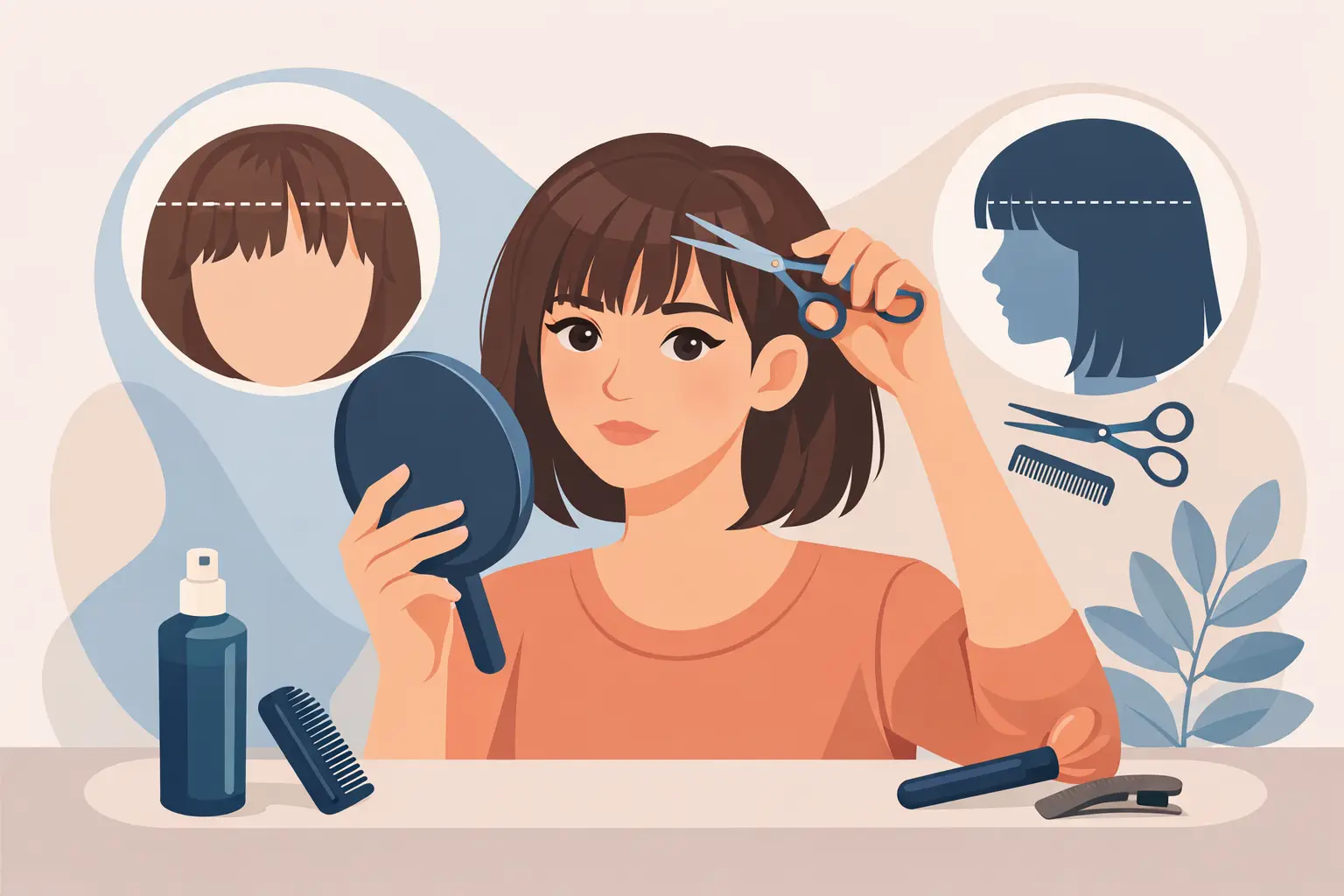
Hold the ends of the longer section lightly between two fingers, keeping your fingers below the desired length. Position the scissors vertically and make one or two tiny snips into the ends. This technique, called point-cutting, removes weight softly and helps the adjustment blend into the rest of the bang line.
Do not cut horizontally across the fringe in one dramatic motion. That approach creates a hard line, magnifies small hand movements, and often invites another round of trimming. After each tiny cut, release the hair, comb it into place, and step back from the mirror.
The practical rule is simple: trim less than you think you need. You can always take another millimeter. You cannot put it back.
Check the Shape From More Than One Angle
Look at your bangs from the front, then turn slightly to each side. A fringe that looks balanced head-on can have a disconnected corner or an overly heavy section when viewed in profile. If you wear glasses, put them on before making your final judgment. Frames change how the bang length reads around the eyes.
If you use a round brush, dry shampoo, or styling cream daily, finish your usual routine before deciding whether more trimming is needed. Styling can solve a surprising number of minor unevenness issues without cutting at all.
Styling Fixes That Can Buy You Time
When one side is misbehaving, direction and root control are often more useful than another trim. While blow-drying, move the bangs briefly from left to right and then right to left before settling them into their final position. This loosens a stubborn part and helps the fringe fall more evenly.
For a cowlick, dry the roots first. Place the nozzle close to the hairline and direct the hair opposite the way it naturally lifts. Once the roots are nearly dry, guide the bangs forward and finish with a cool shot. The cool air helps set the shape without making it stiff.
A small amount of lightweight styling cream can soften separated ends, while dry shampoo can absorb oil that makes one portion clump together. Use both sparingly. Too much product can make bangs stringy, heavy, or overly piecey, which can exaggerate unevenness.
If your fringe is between appointments, try changing the presentation rather than forcing a correction. A soft side sweep, a slightly deeper part, or a gentle curtain opening can make growing bangs look intentional. This is especially helpful when one area needs time to catch up.
When a Salon Correction Is the Better Choice
Professional help is the best choice when the unevenness is more than minor, when you have cut into the main body of the bangs, or when you are tempted to keep evening out both sides. That cycle is how a delicate fringe becomes too short, too narrow, or disconnected from the haircut.
A stylist can assess the architecture behind the problem: your face shape, hair density, hairline, natural movement, and the way the fringe blends into layers around the temples. A correction is not always about cutting more. Sometimes it means softening a corner, redistributing weight, adding a subtle face-framing connection, or styling the existing length in a more flattering direction.
For clients who want a camera-ready result, this attention to proportion is especially valuable. Bangs behave differently under direct light, in professional photography, and during an outdoor San Diego event where wind and coastal moisture can shift the finish. At BB Meme Salon, fringe work is approached as part of the full image, not as an isolated line above the brows.
How to Avoid Uneven Bangs Next Time
Ask for a fringe that works with your real routine. If you air-dry most days, say so. If you wear glasses, bring them to the appointment. If you prefer a center part but occasionally sweep your hair to one side, your stylist should know that before shaping the fringe.
Between appointments, avoid trimming out of frustration. Bangs usually need a professional refresh more often than the rest of a haircut, but the ideal timing depends on length and style. Blunt micro bangs may need attention every few weeks, while curtain bangs can grow out more gracefully.
Treat your fringe gently at home. Clean it when needed, use heat protection before hot tools, and avoid constantly brushing or separating it with your fingers. A few intentional styling minutes in the morning are far more effective than an emergency cut at night.
The most polished bangs still have movement, softness, and personality. Give a minor imperfection a moment to settle before trying to correct it. When the shape truly needs help, a measured adjustment – or an expert pair of hands – can bring the focus back to your eyes, your expression, and the image you want to create.