About the author : bbmemesalon@gmail.com

A bridal hairstyle is rarely just an updo at the end of a long morning. The most compelling wedding hairstyle transformation examples begin weeks or months earlier, when hair health, shape, color, and personal style are considered together. The final look should feel elevated in photographs, secure through hugs and dancing, and unmistakably like the person wearing it.
At BB Meme Salon, wedding styling is approached as part of total image creation. That may mean refining a haircut before the event, adding dimension that catches soft San Diego light, or choosing a style that works beautifully with the gown, veil, makeup, and the way the bride wants to move through the day.
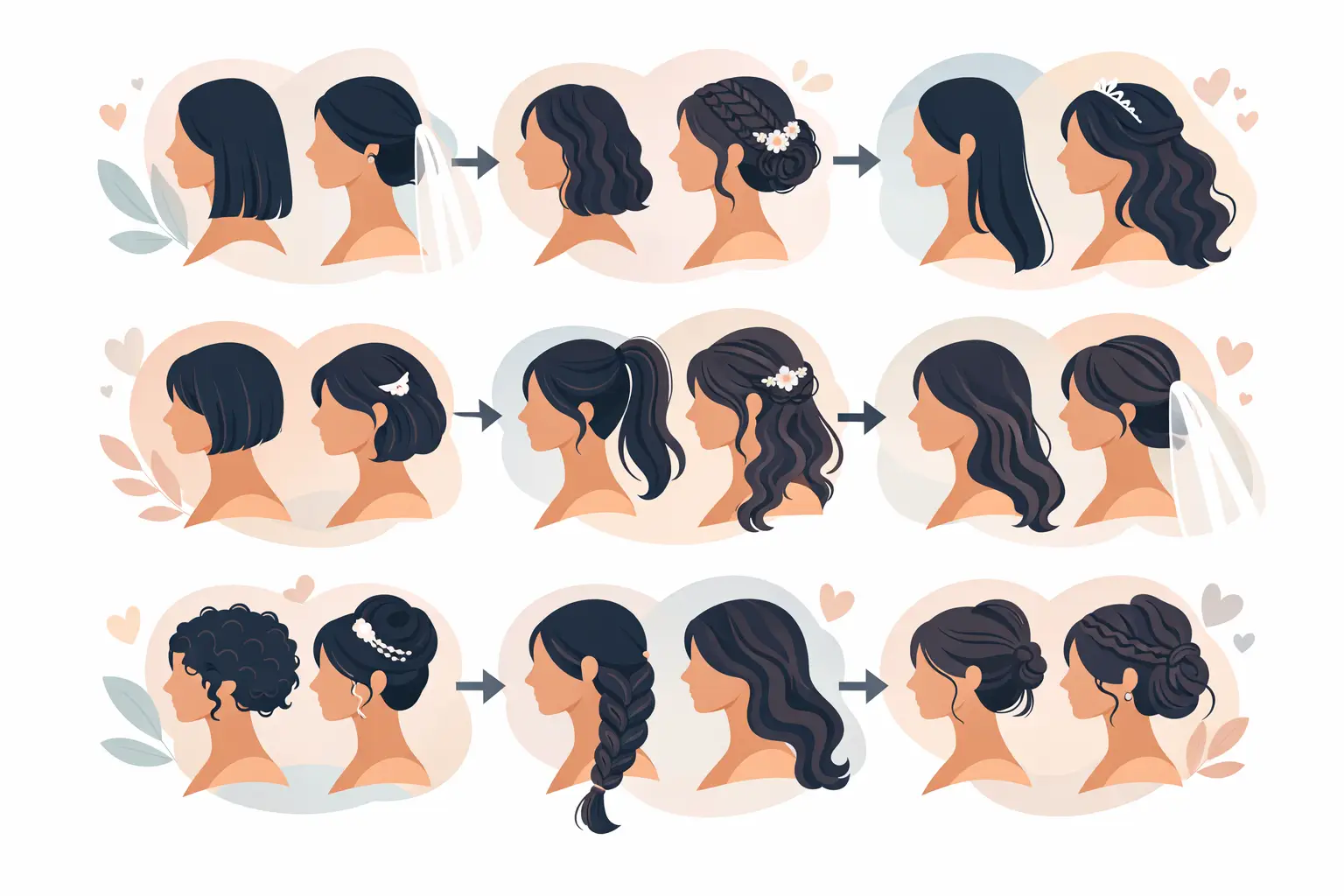
Wedding Hairstyle Transformation Examples That Feel Personal
The strongest transformations do not all look dramatic at first glance. Sometimes the change is a subtle adjustment in color placement or a cleaner shape around the face. What makes it meaningful is the way every detail works together.
1. Fine, flat hair becomes a soft, full low bun
Fine hair can make a bride worry that an updo will appear small or lose structure before the ceremony ends. A thoughtful transformation starts with preparation: a fresh but not overly conditioned wash, strategic texturizing, and sometimes a small amount of lightweight extension hair for fullness.
The finished low bun may look airy and effortless, with softly released pieces at the temples. Underneath, it is carefully anchored so it can hold from first look to final dance. This is an ideal direction for a bride who loves understated elegance but still wants visual presence in photographs.
The trade-off is that a deliberately loose style needs more structure than it appears to have. An experienced stylist can create softness without leaving the hairstyle vulnerable to coastal humidity or an active celebration.
2. One-length dark hair becomes a dimensional Hollywood wave
Glossy waves are classic, but one-dimensional dark hair can sometimes lose its movement in pictures. A few face-framing highlights or subtle ribbons of warm brunette can create a transformation before the curling iron ever comes out.
On the wedding day, the hair is shaped into brushed, polished waves with an intentional side part. The result is not simply curled hair. It is a refined silhouette that catches light across the curves of each wave and frames the face with quiet drama.
This look pairs beautifully with a clean neckline, a silk gown, or vintage-inspired accessories. It asks for a little care during the day, especially if the weather is warm, but it offers exceptional impact in close-up portraits.
3. A grown-out bob becomes a textured half-up style
Brides with a bob or lob often assume they must grow their hair dramatically to have a wedding-worthy style. In reality, shoulder-skimming hair can create a fresh, modern transformation. The key is choosing a design that celebrates the length instead of fighting it.
A half-up style can lift the crown, reveal the neckline, and leave enough movement through the ends to feel romantic. Fine braiding, twisting, or a small pearl accent can give the look detail without making it feel overly formal. If more volume is desired, a few carefully blended extensions can support the shape rather than change the bride beyond recognition.
This option works especially well for a garden ceremony, a beach-adjacent celebration, or a bride who wants her hair down but does not want it falling forward all day.
4. Long, heavy hair becomes a sculpted high bun
Long hair has options, but its weight can challenge a high updo. Without the right preparation, a bun may pull at the scalp or begin to drop as the day goes on. The transformation here is as much about comfort as it is about form.
Hair is prepared in sections, with the volume distributed at the crown and the weight secured close to the head. The final bun may be sleek and architectural or softened with airy detail, depending on the gown and overall beauty direction. A higher placement can lengthen the neck and create a beautiful profile for earrings, an open back, or a dramatic veil.
This is a particularly strong choice for brides who want a polished, editorial finish and do not want to think about their hair once the celebration begins.
5. Warm, brassy blonde becomes a luminous braided chignon
Color can change the entire mood of a bridal hairstyle. Blonde hair that has become overly warm or uneven may look less polished under flash photography, while a carefully balanced gloss can bring softness and reflectivity back to the color.
Once the tone is refined, a braided chignon reveals the dimension beautifully. The braid creates texture, and the low bun keeps the overall effect graceful rather than busy. It is romantic without becoming overly bohemian, making it adaptable for both traditional and contemporary weddings.
Timing matters with color transformations. Major color changes should not be saved for the week of the wedding. A bridal consultation creates space to test the direction, preserve hair condition, and make sure the result feels right in person as well as on camera.
6. Natural curls become a defined, romantic statement
A curl transformation does not have to mean smoothing natural texture away. For many brides, the most powerful change comes from giving curls the moisture, definition, and intentional shape they deserve.
The preparation may include a conditioning plan, a curl-friendly trim, and a trial to find the right balance of volume and hold. On the wedding day, curls can be worn down with a deeply defined side part, gathered into a low textured style, or accented with a comb, flowers, or a veil.
The goal is controlled movement, not stiffness. Natural curls respond to weather differently than straight hair, so a stylist should consider the ceremony location, timeline, and whether the bride plans to change looks before the reception.
7. Everyday layers become a veil-ready French twist
The French twist has moved far beyond its formal reputation. With a few face-framing pieces and a slightly relaxed finish, it can feel modern, feminine, and remarkably chic. It is also one of the best wedding hairstyle transformation examples for a bride who usually wears her hair down and wants a meaningful occasion look.
Layered hair needs thoughtful pinning so shorter pieces stay secure without looking forced. A stylist can build a shape that accommodates a veil at the crown or lower at the twist, then remove the veil later without unraveling the hairstyle.
For brides wearing a detailed gown, this style brings balance. It keeps the visual focus on the face, shoulders, and dress while still looking considered from every angle.
8. Short hair becomes an intentional polished crop
Short hair deserves its own bridal language. A transformation can come from a fresh precision cut, a rich color glaze, and styling that gives the hair direction and shine. A sculpted pixie, softly waved crop, or sleek tucked style can look as distinctive as any elaborate updo.
Accessories matter here, but restraint is often the most elegant choice. A single jeweled clip, a small comb, or a veil positioned with care can complete the look without overwhelming it. The result is confident, modern, and deeply personal.
9. Daytime ceremony hair becomes an evening reception look
Not every transformation needs to happen before the ceremony. A bride may begin with a low ponytail or half-up style for a daytime event, then shift into a more dramatic bun or fuller waves before the reception. This approach is especially useful for warm-weather weddings, outfit changes, or brides who want a different feeling once the dance floor opens.
The success of a second look depends on planning. The first style must be designed with the transition in mind, and the schedule must allow time for it. When handled well, it gives the day a sense of progression and makes the reception entrance feel like a new moment rather than a simple touch-up.
How to Choose the Right Bridal Transformation
Begin with the feeling you want, not just a saved image. Do you want to feel soft and romantic, sleek and editorial, effortless and sunlit, or glamorous and cinematic? A stylist can translate that feeling into choices about parting, texture, color, volume, and accessories.
Then consider the practical details. The gown neckline, ceremony setting, season, veil placement, and length of the celebration all influence what will work best. A beach ceremony may call for a style with movement but dependable anchoring. A formal ballroom wedding can support more sculptural polish. Neither approach is better. The right one supports the atmosphere of the day and the way you want to feel in it.
A trial appointment is where inspiration becomes a plan. Bring images, but also bring honest information about what you normally wear, what feels uncomfortable, and which features you love to highlight. A beautiful wedding hairstyle should never feel like a costume. It should feel like your own image, carefully composed for one of life’s most photographed and meaningful celebrations.
Give your hair the same attention you give the flowers, the dress, and the photographs. When color, condition, styling, and personal expression are aligned, the transformation is not just visible in the mirror. It is felt in every confident step toward the aisle.