About the author : bbmemesalon@gmail.com

A haircut can look polished from every angle in the salon chair, then feel entirely different once you style it at home or see it in photos. That is why the choice between layers versus blunt cuts deserves more than a quick glance at a reference image. The right shape should work with your natural texture, your daily routine, and the way you want to present yourself – whether that means effortless movement, a sharp editorial finish, or something in between.
Layers Versus Blunt Cuts: The Essential Difference
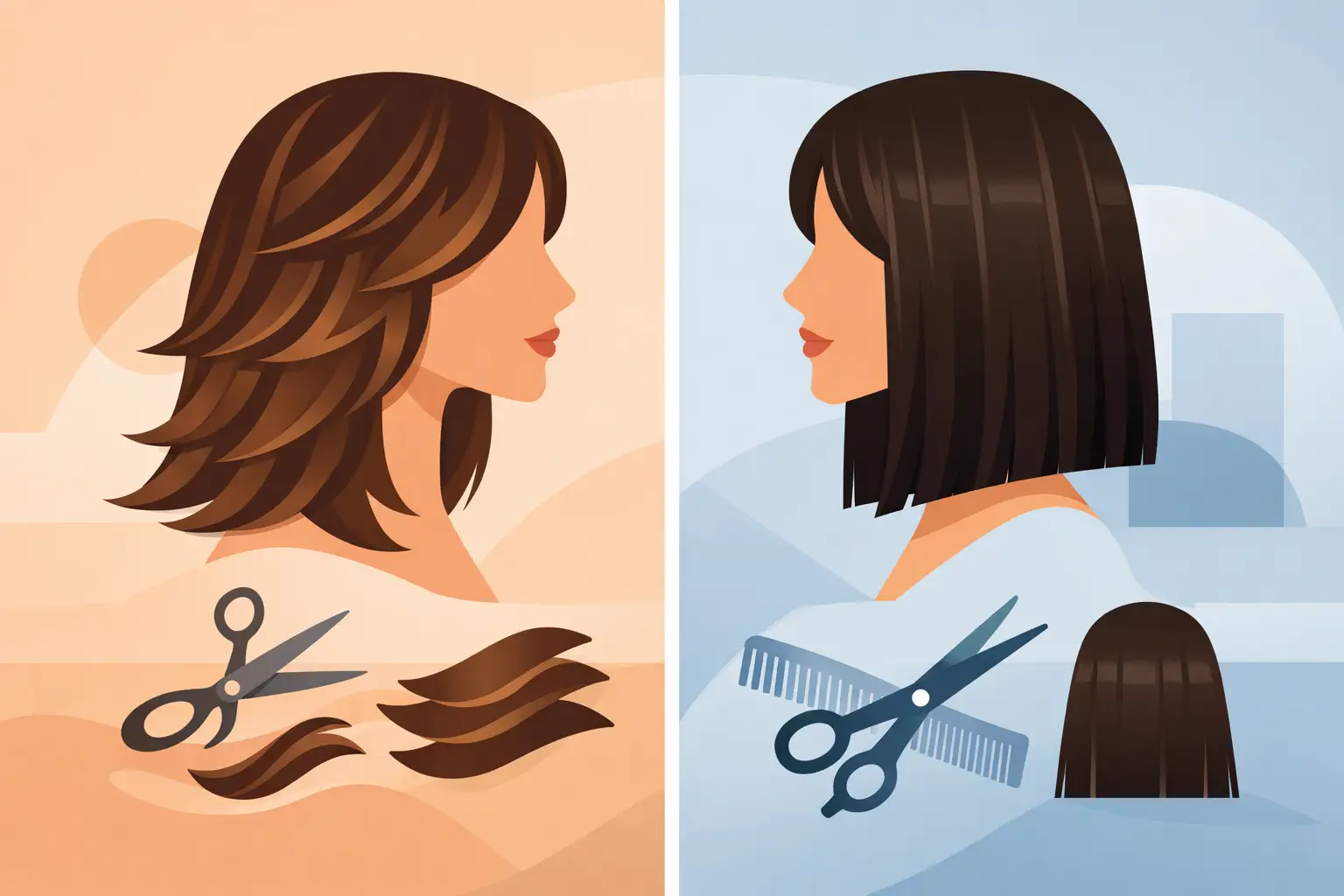
A blunt cut is cut to one strong, deliberate baseline. Think of a precise bob, a sleek lob, or long hair with a full, even perimeter. It creates density at the ends and gives the hair a polished, intentional silhouette. On camera, blunt lines often read as refined and modern because they hold their shape clearly.
Layers remove weight from selected areas of the hair to create dimension, movement, or lift. They can be long and subtle, soft around the face, textured through the ends, or more pronounced for a shapely, expressive effect. Rather than presenting one clean edge, layers give the haircut a sense of motion.
Neither approach is automatically better. A blunt cut offers visual strength and fullness. Layers offer flexibility and softness. The artistry comes from choosing the amount of each that supports your features, texture, and lifestyle.
When a Blunt Cut Creates the Stronger Look
Blunt cuts are often ideal for fine or medium hair that needs the appearance of more density. Since the ends are kept full, the hair can look thicker and healthier, especially in bobs, lobs, and one-length cuts. If your hair tends to look wispy at the bottom, a blunt perimeter can make an immediate visual difference.
This shape is also a beautiful choice for someone drawn to minimal, architectural style. A clean jaw-length bob can emphasize the neck and cheekbones. A collarbone-length blunt cut can feel sophisticated without being severe. On longer hair, an even baseline creates a luxe, healthy finish that lets rich color and shine take center stage.
Blunt does not have to mean rigid. A skilled stylist can preserve a strong outline while adding discreet internal shaping, soft face-framing, or a slightly rounded edge. This is particularly useful for clients who want density without a helmet-like result.
The trade-off is that a blunt cut can reveal uneven texture, dry ends, and overgrown shape more quickly. It often benefits from regular trims and a little intentional styling. For a sleek finish, a blowout, smoothing product, or hot tool may be part of the routine. If you prefer to wash, air-dry, and leave the house with minimal effort, the degree of bluntness should be chosen carefully.
Best occasions for a blunt shape
A precise cut makes a confident statement for professional headshots, formal events, milestone birthdays, and any moment when you want your image to feel elevated and composed. The silhouette is especially striking when paired with glossy color, a clean center or side part, and makeup that lets your features remain the focus.
For bridal styling, a blunt cut can create a beautiful foundation for a smooth low bun, polished waves, or a modern half-up look. The key is allowing enough length and texture for the desired style well before the event.
When Layers Bring Hair to Life
Layers are often chosen for the way they help hair move. On medium to thick hair, they can release bulk so the shape feels lighter and more wearable. On naturally wavy or curly hair, thoughtful layers can encourage definition instead of allowing the cut to fall into a heavy triangle shape.
Long layers are a classic option for clients who love their length but want more shape around the face and through the mid-lengths. They can make a blowout feel more fluid, give waves room to form, and create a softer finish in photos. Face-framing layers can also draw attention toward the eyes, cheekbones, or jawline when customized to your proportions.
More textured layering can suit clients with an expressive, undone style. It gives hair a lived-in quality and can make everyday styling feel less formal. However, texture should never be added simply because a reference photo looks airy. If the hair is very fine, heavily layered ends may become too thin. If the hair is damaged or lightened, excessive layers can make breakage more visible.
Layers also ask for a different kind of styling awareness. Their movement is part of their beauty, but that movement may need support from a round brush, diffuser, curling iron, or lightweight styling products. The right products matter: too much heavy cream can collapse lift, while too much texture spray can make dry ends look rough.
Layers for curls, waves, and fuller textures
For wavy and curly textures, layering is often less about creating volume and more about placing volume in the right places. A well-shaped cut can keep curls from collecting at the bottom, help the crown sit more naturally, and make the overall silhouette feel balanced.
The amount of layering should be considered carefully. Very short layers can create dramatic height and personality, but they may also increase shrinkage and require more frequent shaping. Longer layers preserve weight and length while still giving curls room to move. During a consultation, it helps to discuss how you normally wear your hair, how much shrinkage you experience, and whether you style it naturally or with heat.
Face Shape Matters, but It Is Not the Rulebook
Face shape can guide a haircut, but it should not limit it. Hair density, texture, part placement, styling habits, and personal style often have just as much influence on the final result.
A sharp blunt bob can beautifully complement an oval or heart-shaped face, while a longer blunt lob can elongate and soften a rounder face. Yet the part, length, and edge of the cut will change the effect. Moving a bob below the chin or adding a gentle curve around the front can make a strong line feel more forgiving.
Layers can soften the area around the cheeks, add width where a face appears narrow, or create vertical movement that lengthens the overall look. But face-framing pieces should be tailored to where they begin. A layer that starts at the cheekbone has a very different visual effect from one that begins below the jaw.
The most flattering haircut is not based on a single category. It is a collaboration between your desired image and the hair you actually live with every day.
Think About Your Styling Routine Before You Commit
The most beautiful haircut is one you can maintain with confidence. Before choosing layers or a blunt cut, consider how much styling time feels realistic on an ordinary San Diego morning, not just before a special occasion.
If you enjoy a polished blowout, smooth waves, or a sleek finish, a blunt shape may feel satisfying and high-impact. If you like texture, air-dried movement, or a softer silhouette, layers may be a more natural fit. This is not absolute: a layered cut can be blown smooth, and a blunt cut can be tousled. Still, the haircut should support your preferred finish rather than fight it.
Maintenance matters, too. Short blunt bobs tend to need reshaping more frequently to retain their precision. Long layers may grow out gracefully, but they still need regular care to prevent the ends from becoming thin or disconnected. Color services can also affect the decision. A bright dimensional blonde may look especially luminous with movement from layers, while a glossy single-process brunette can look exceptionally rich with a strong blunt line.
The Most Modern Choice May Be Both
Many of the most wearable cuts combine the two approaches. A stylist may create a full blunt baseline for density, then add nearly invisible internal layers to prevent the hair from feeling heavy. Or they may build soft long layers while keeping the perimeter substantial enough to look healthy in photographs.
This balanced approach is particularly useful if you want hair that feels polished for work, moves beautifully for an event, and still looks like you on a relaxed weekend. At BB Meme Salon, the consultation is part of the image-creation process: your stylist can consider your texture, color, styling preferences, and the occasions you want your hair to support.
Bring reference images, but be ready to talk about what you like in them. Is it the fullness at the ends, the softness around the face, the shine, the volume, or the way the hair moves? Those details reveal more than the label of “layers” or “blunt.”
Choose the cut that makes getting ready feel less like correction and more like self-expression. When the shape fits your hair and your life, it becomes a quiet, beautiful part of how you show up.