About the author : bbmemesalon@gmail.com

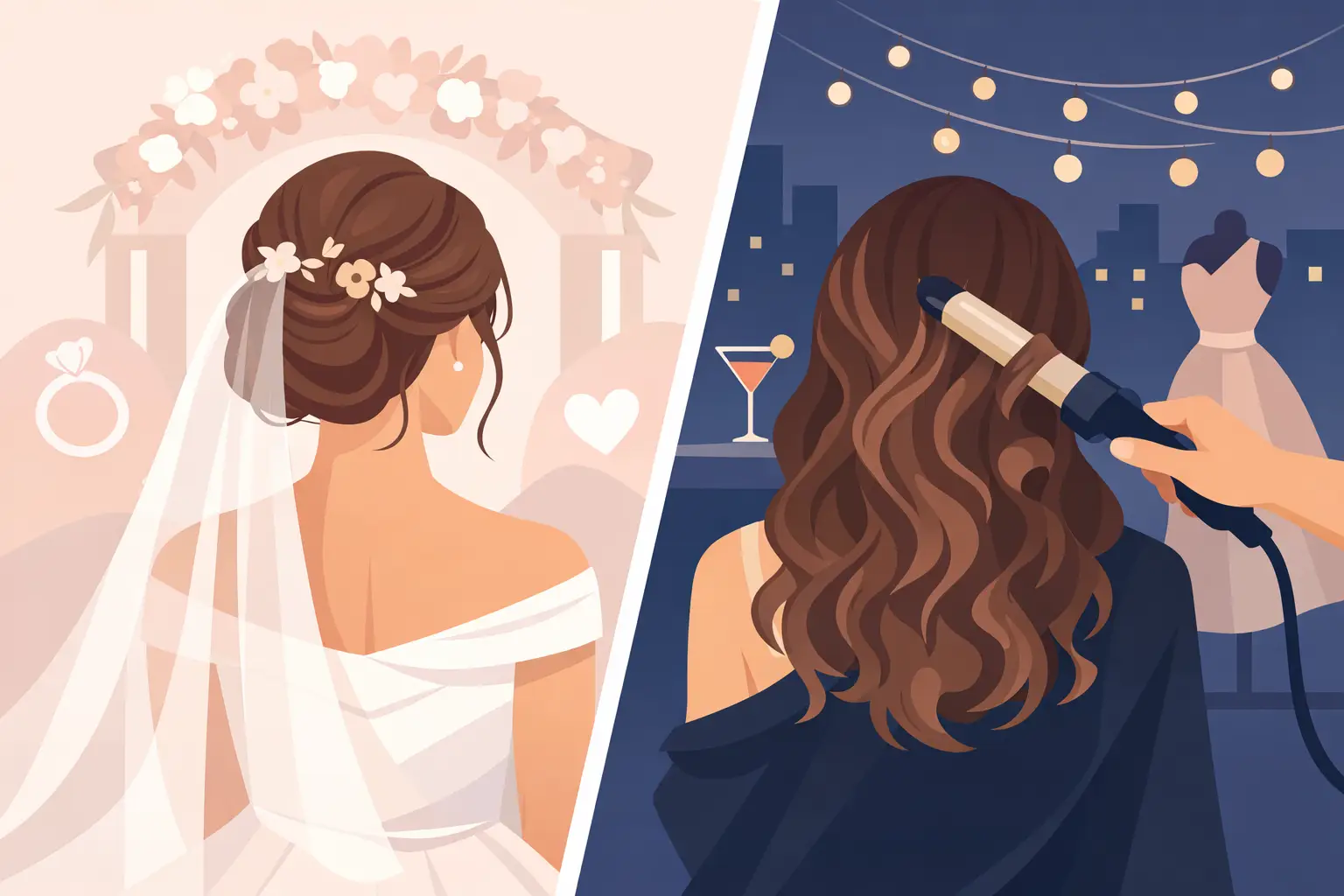
A ceremony may last half an hour, but a wedding hairstyle is asked to carry much more: portraits, embraces, changing light, a veil, a dance floor, and the emotional intensity of the day. That is where bridal hair versus event styling becomes a meaningful distinction. Both services create a polished, camera-ready result, yet bridal styling is built around a longer timeline, a more personal design process, and a level of durability that a typical special-event look may not require.
Choosing the right service is not about making one occasion feel more important than another. It is about giving your hair the preparation, structure, and attention that suit the moment you are creating.
Bridal Hair Versus Event Styling: The Core Difference
Event styling is designed to make you look exceptional for a specific occasion: a gala, birthday dinner, professional photo session, graduation, anniversary, holiday party, or evening out in San Diego. The appointment is typically focused, efficient, and responsive to the look you want that day. You may arrive with inspiration images, choose soft waves, a sleek ponytail, a textured updo, or a half-up style, and leave feeling polished and ready to be seen.
Bridal hair begins with a broader question: how should you feel from the first photograph through the final celebration? The hairstyle must work with the gown, neckline, veil or hairpiece, makeup direction, wedding setting, schedule, and the way you naturally move. It also needs to remain beautiful through hugs, weather, happy tears, and hours of celebration without looking overly fixed or losing its shape.
That additional consideration is what makes bridal hair a curated service rather than simply an elevated updo. The final look should still feel like you, only composed with greater intention.
The Bridal Design Process Is More Personal
A bridal consultation gives the stylist room to understand the complete visual story. A reference photo is useful, but it is only a starting point. The same low chignon can look soft and romantic on one person, refined and editorial on another, or feel entirely different when paired with a high neckline, dramatic earrings, or a cathedral-length veil.
Hair density, length, texture, color dimension, face shape, and comfort all influence the design. A bride who rarely wears her hair up may love the idea of a sculpted bun but feel unlike herself once it is in place. Another may arrive convinced she wants loose waves, then realize that a warm outdoor ceremony and long reception call for a more supported shape.
A thoughtful bridal process makes room for those discoveries before the wedding day. The goal is not to copy an image exactly. It is to translate the mood of that image into a style that flatters you, suits your hair, and belongs naturally within the wedding.
Trials Create Confidence, Not Just a Preview
A bridal trial is often the most valuable difference between bridal and event styling. It is an opportunity to see the look in motion, check how it photographs, test accessory placement, and make small adjustments without the pressure of a packed wedding-day schedule.
During a trial, a stylist may refine the amount of volume at the crown, shift a part, loosen the face-framing pieces, or recommend a different preparation plan. These details can appear subtle in the salon chair, but they change the overall effect in photographs and in person.
Trials are especially helpful if you are considering extensions, a major color refresh, a new haircut, or an accessory with a particular attachment method. They also create clarity for the morning of the wedding, when everyone benefits from a plan that has already been considered and agreed upon.
Durability Means Structure With Movement
The most successful bridal hairstyles do not look stiff, even when they are engineered to last. They balance structure with movement. Pins are placed to create a secure foundation; styling products are selected for your hair type; curls are set and shaped with the expected conditions in mind. The finished result should have enough flexibility to feel touchable while maintaining its silhouette.
Event styles need longevity as well, especially for a formal dinner or a night of dancing. But the service may not need to account for a five-hour photo timeline, a ceremony breeze, multiple outfit layers, or a veil being removed between moments. An event hairstyle can prioritize a beautiful immediate finish with a lighter level of construction when that is appropriate.
This is also where expectations matter. Very soft, brushed-out waves and maximum all-day hold can coexist, but there is a trade-off. The more relaxed the finish, the more natural change you should expect over time. A skilled stylist can create a lovely balance, but no hairstyle should promise to look frozen from morning to midnight. Bridal styling should age gracefully, not resist reality.
Timing Changes the Entire Experience
An event styling appointment is often scheduled close to the time you need to leave. You arrive, settle in, and the style is created within a defined appointment window. It is a wonderful way to prepare for an occasion without turning the preparation itself into a major production.
Wedding-day styling requires a more detailed rhythm. The bridal schedule needs to account for the bride, wedding party, mothers, travel, dressing time, makeup, photography, and any first-look plans. The bride is often styled earlier than expected because the final look needs time for veil placement, touch-ups, portraits, and a calm transition into getting dressed.
A well-built schedule protects the atmosphere of the morning. Instead of rushing through decisions, everyone knows where to be and when. That sense of ease is part of the bridal service. Beauty preparation can become one of the most memorable, intimate parts of the day when it has enough room to unfold.
Accessories Need More Than a Last-Minute Pin
For an event, accessories may be optional: a statement clip, pearl pins, a ribbon, or an elegant headband can complete the look. They are often selected to complement an outfit and can be incorporated quickly if the style allows.
For bridal hair, accessories are part of the architecture. A veil must sit securely without flattening the crown or disturbing the shape of the style. Combs, floral pieces, tiaras, and heirloom accessories need thoughtful placement so they look intentional from the front, side, and back. The stylist also considers how and when the piece may be removed.
Bring accessories to the trial whenever possible. Seeing the complete composition helps determine whether the hair should be more textured, sleeker, higher, lower, or slightly more open around the face. It also prevents a beautiful accessory from becoming an afterthought.
Photography Gives Both Services a Different Purpose
Every special occasion may be photographed, but weddings are often documented from morning through late evening and revisited for years. Bridal hair needs to read beautifully at close range and from a distance. It should complement the bridal portrait without distracting from your expression, gown, or overall presence.
This does not mean bridal hair must be more elaborate. Sometimes the most striking bridal choice is a clean, glossy blowout, soft waves with a precise part, or a low ponytail finished with exquisite detail. What matters is proportion and cohesion. The hairstyle should work with the total image, especially when the celebration includes professional photography.
At BB Meme Salon, that image-conscious point of view informs every special-moment appointment. Hair is considered not only as a style, but as part of how you enter a room, move through an experience, and see yourself in the images that remain.
How to Choose the Service That Fits Your Occasion
Start with the demands of the day. If your occasion involves a ceremony, a full wedding timeline, professional photography, a veil or heirloom accessory, a wedding party, or a look you want to test in advance, bridal styling is likely the right choice. It gives your stylist the time and framework to create something beautiful with greater confidence.
If you are attending a celebration, stepping in front of the camera for a shorter session, or simply want to feel especially polished for an evening, event styling may be exactly what you need. Bring a few visual references, wear an outfit with a similar neckline if possible, and share how long you need the style to last. Clear communication lets the stylist make refined choices from the start.
Your hair does not need a wedding to deserve artistry. Whether you are preparing for vows, a milestone, or a night that simply matters to you, choose a style that feels considered, comfortable, and unmistakably yours.